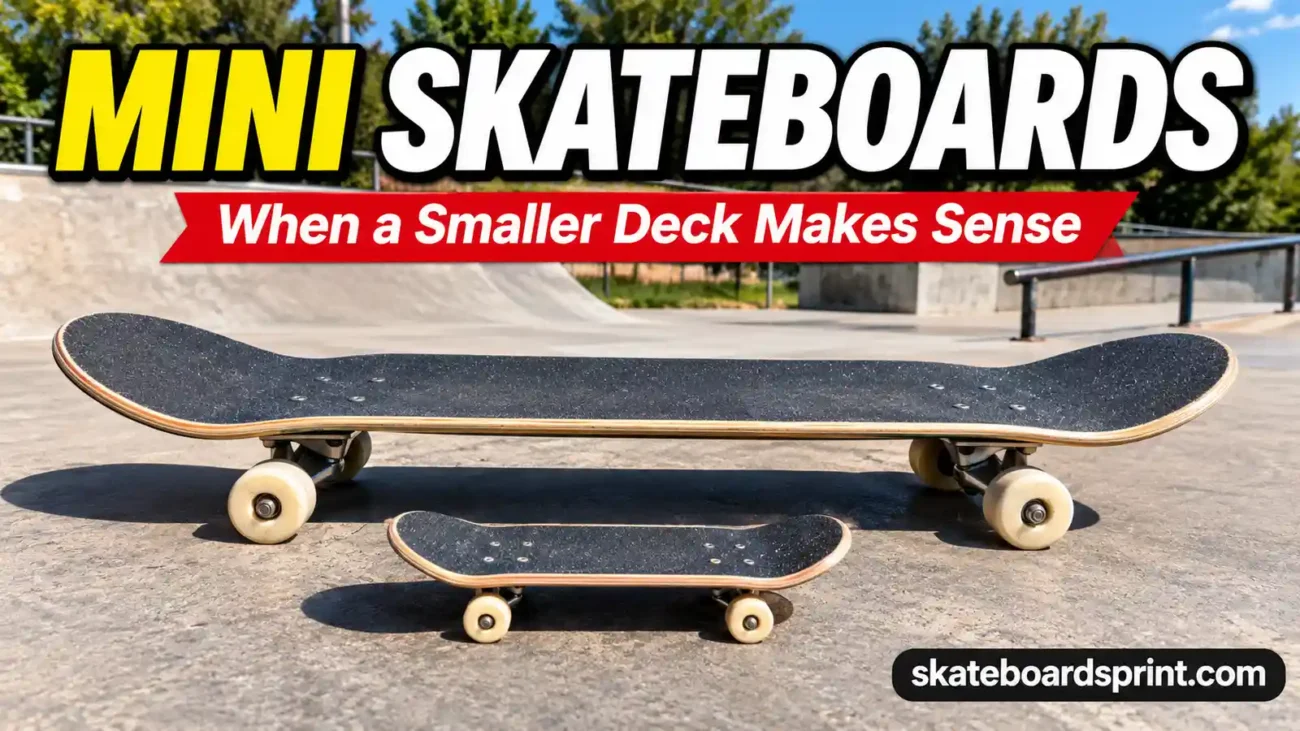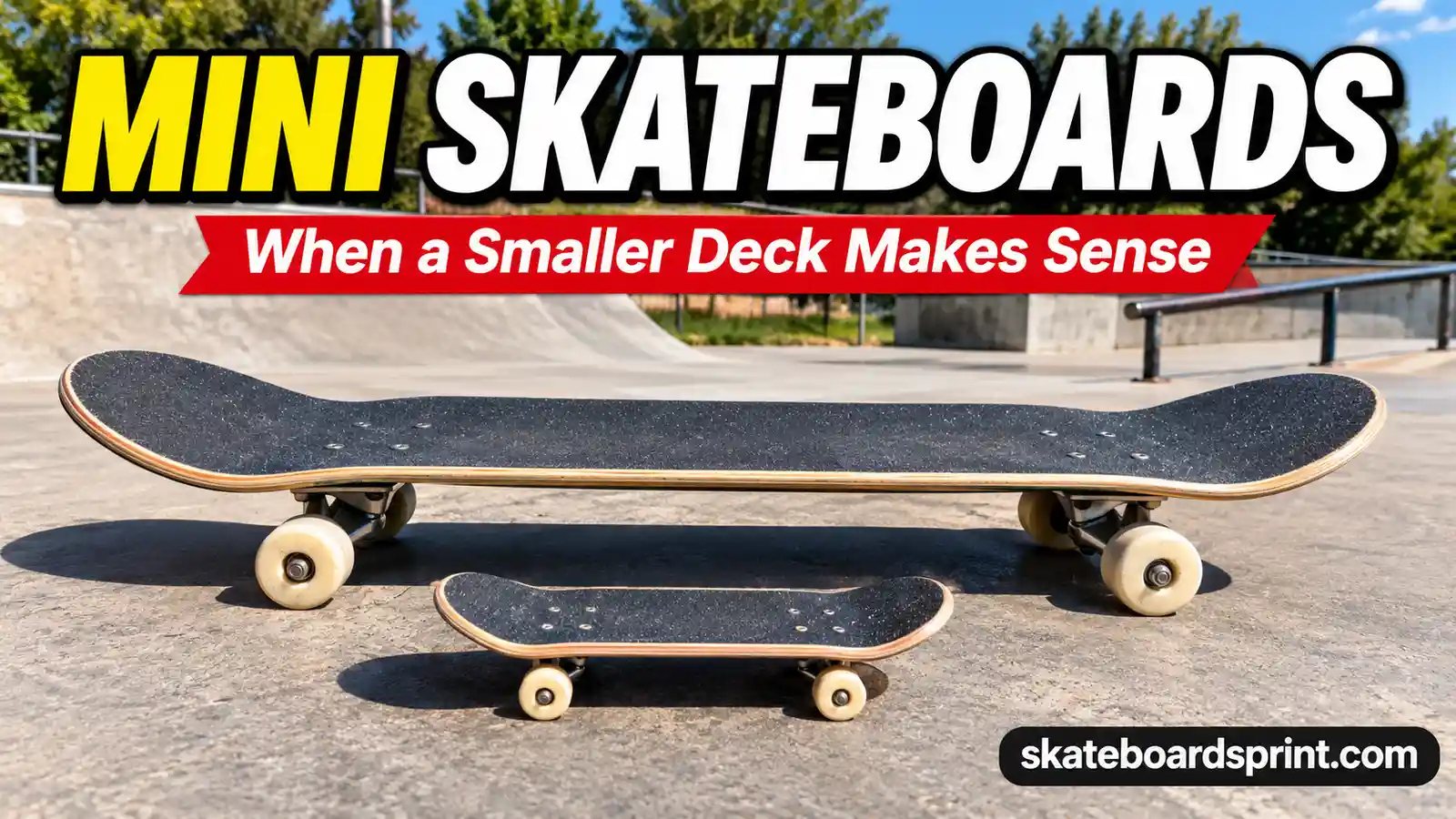
Mini skateboards look simple: make the deck smaller, and the board becomes easier to carry. The trade-off is that a shorter or narrower platform can also leave less room for your feet and make balance feel less forgiving. That is why a mini skateboard can be a smart choice for one rider and an uncomfortable one for another.
The term mini skateboard is not a strict industry size category. In this guide, it means a rideable skateboard with a compact deck, especially one narrower than 7.5 inches or noticeably shorter than a regular street board. Some are mini street boards; others are mini cruisers with softer wheels. Those differences matter more than the word “mini” on a product listing.
Below, you will see what the measurements mean, who is most likely to enjoy a smaller deck, when a standard board is the better option, and what to check before buying. This guide is about boards you can actually stand on and ride—not tiny fingerboards operated with your hands.

On This Page
Quick answer: A mini skateboard can make sense for a younger or smaller-footed rider, someone who values portability, or a person who wants a compact board for short, casual rides. It is not automatically easier for beginners, safer for children, or suitable for every adult. Check deck width, length, wheelbase, truck fit and wheel clearance—not just the product name.
What Is a Mini Skateboard?
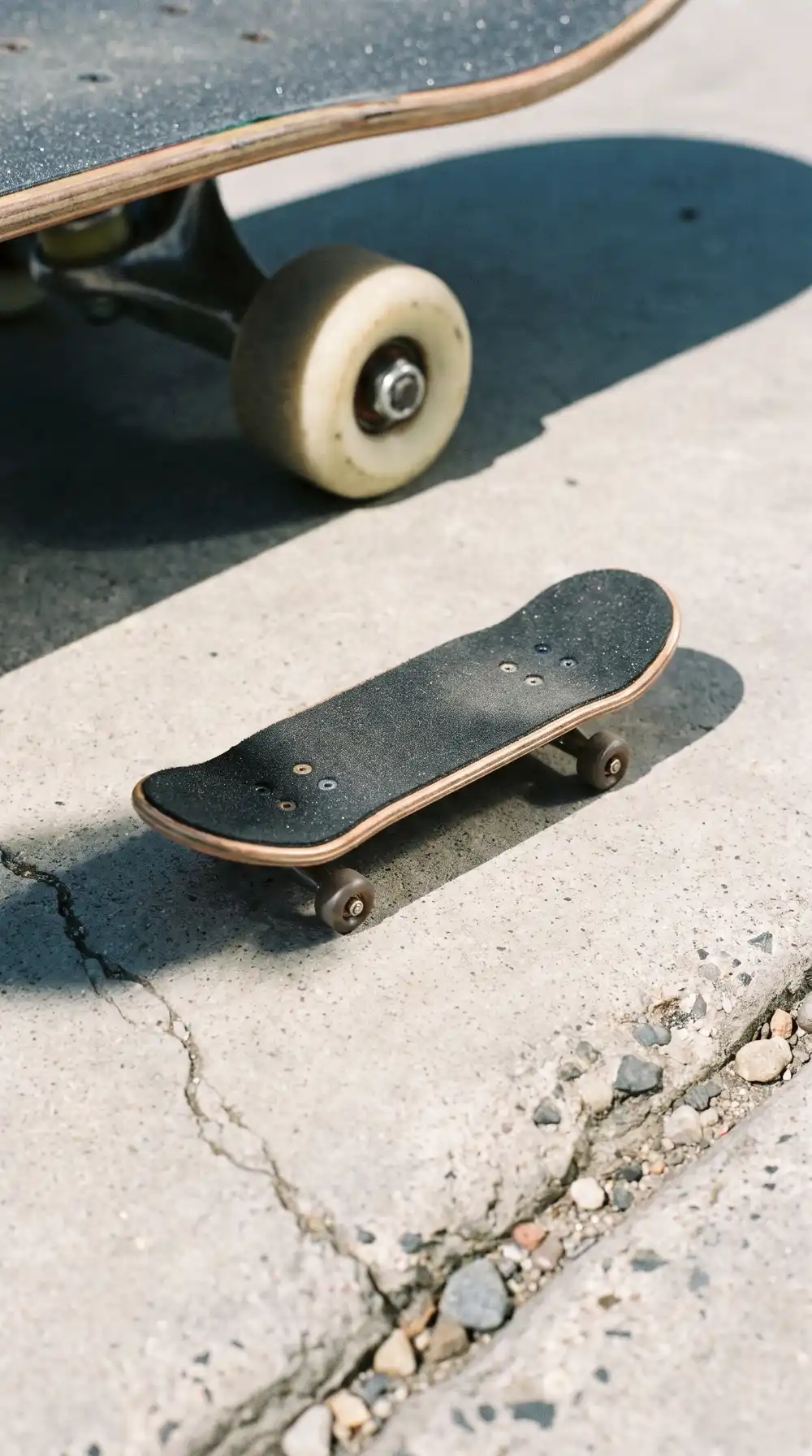
A mini skateboard is a compact, rideable board designed around a smaller-than-usual deck. Depending on the model, “mini” may describe the deck’s width, its overall length, or both. There is no single measurement that every manufacturer uses, so two products labelled mini can feel very different underfoot.
You will generally come across two broad styles. A mini street skateboard resembles a traditional street setup, often with a double-kick deck and harder wheels intended for smoother concrete and tricks. A mini cruiser is usually aimed at relaxed rolling and portability; it may have softer, larger wheels that are more comfortable on ordinary pavement. A compact board is not automatically a cruiser, and a cruiser is not automatically a trick board.
Also watch out for the word “mini” on toy listings. A fingerboard is a tiny model controlled with your fingers. It is a fun desk toy, but it is not a rideable skateboard. Check the actual dimensions and intended use before ordering, especially when shopping for a child.
Mini Skateboard Sizes: What Measurements Matter?
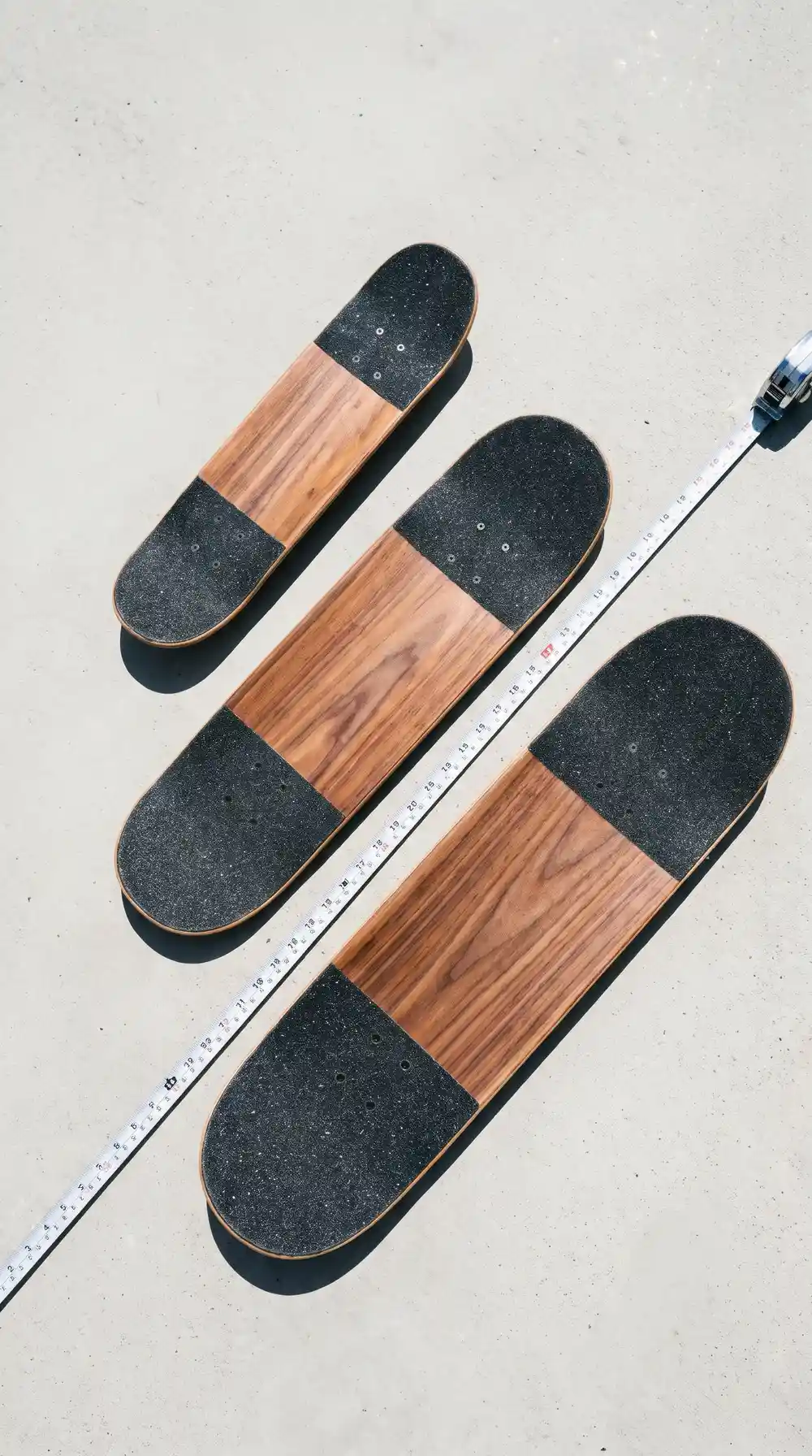
There is no official mini-skateboard size chart that applies to every brand. A useful starting point is to treat decks under 7.5 inches wide as compact or mini for the purposes of this guide, while remembering that 7.5 inches is also a common narrow street-deck size. Width alone does not tell you whether a board will fit a rider.
| Measurement | What it affects | What to check |
|---|---|---|
| Deck width | Standing room and how much space your shoes have | Compare the deck width with the rider’s shoe size and preferred stance |
| Deck length | Overall platform size and how much room is available between the kicks | Check the listed length, not just a product photo |
| Wheelbase | The distance between the inner truck mounting points; it influences turning feel and stability | Look for the manufacturer’s measurement when available |
| Truck width | How the wheels sit in relation to the deck | Use the truck size recommended for that exact deck |
| Wheel diameter and hardness | Ride height, roll-over ability and comfort on different surfaces | Check wheel clearance and the surface the board is designed for |
Published product dimensions show why it is worth comparing the numbers. The Retrospec Quip Domino Mini Cruiser is listed at 22.5 × 6 inches, while the Magneto Music Mini Cruiser is listed at 27.5 × 7.5 inches. Both are described as compact boards, but their standing platforms are not interchangeable. The Eggboards Street Red is listed at 19 × 9 inches: very short, but much wider than the other two examples.
For a deeper look at choosing width for a rider’s stance, use our skateboard size guide. The key point is simple: do not buy by age or overall length alone. A few inches of width or a different wheelbase can change how a board feels.
Who Benefits Most From a Mini Skateboard?

A smaller board can be useful when the rider’s proportions and intended use match the design. It is most worth considering in a few situations:
- Younger riders with smaller shoes: A narrower platform may be easier to manage than a wide adult deck, provided the board is genuinely designed for riding and the child can control it.
- Riders with smaller feet: A compact deck can feel less bulky, but the rider still needs enough room to place both feet securely.
- People who carry their board often: A shorter deck can be easier to store in a locker, carry up stairs or take on public transport. Check the actual width and weight too.
- Casual riders who want a compact cruiser: A mini cruiser can suit short trips on suitable, relatively smooth paths when its wheels and geometry match that use.
- Experienced skaters looking for a different feel: A compact setup can be an occasional fun board, as long as the rider understands its limitations.
For children, do not use age as the only sizing rule. Height, shoe size, balance, confidence and the child’s ability to push and stop all matter. A board that is small enough to carry may still be too narrow to stand on comfortably. Adult supervision and properly fitted protective gear remain important.
When Should You Avoid a Mini Skateboard?
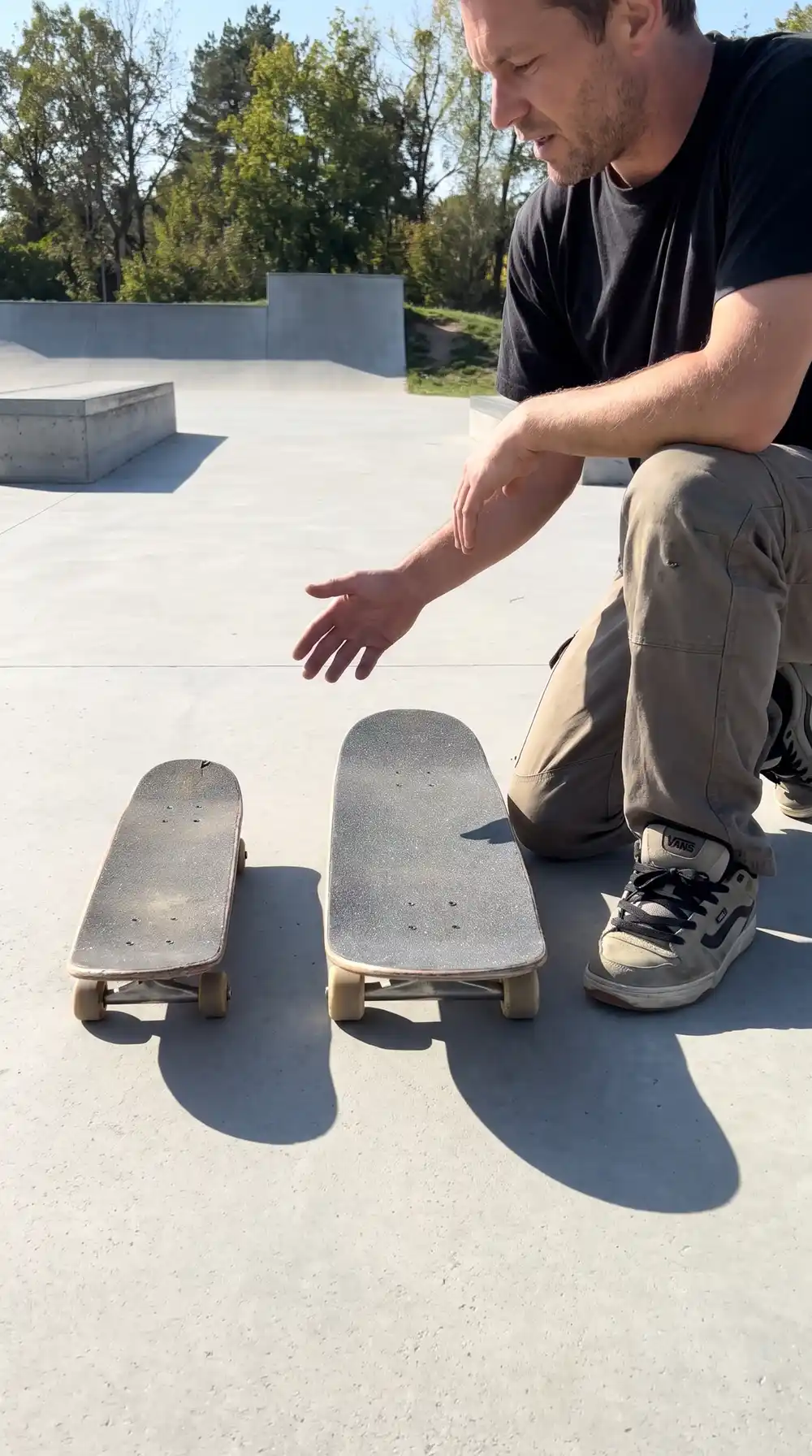
A mini skateboard is not the right shortcut for every rider. Consider a regular-sized deck or a purpose-built cruiser instead if any of these points describe your needs:
- Your shoes overhang the usable platform: If your feet feel cramped or you cannot place them securely, the deck is too small for comfortable control.
- You want a forgiving first skateboard: A very short or narrow deck can leave less room to adjust your stance. A correctly sized standard board may be easier to learn on.
- You plan to ride fast or downhill: Do not choose a tiny board for speed, steep slopes or traffic. A compact setup is not a substitute for a board designed for that terrain and for the rider’s skill level.
- Your route has rough pavement: A small hard-wheel setup can feel harsh and may struggle over cracks and debris. A suitable cruiser with appropriate wheels may be more practical, but no wheel makes poor surfaces risk-free.
- Your main goal is technical street skating: Some mini street decks can be used for basic tricks, but a very small platform may make consistent foot placement harder. Choose a conventional street setup if flip tricks and park progression are the priority.
If you are unsure, compare the board with a standard deck in person or start with a more conventional size. The cheapest or smallest option is not a bargain if the rider quickly outgrows it or cannot control it comfortably.
Mini Skateboard vs. Regular Skateboard
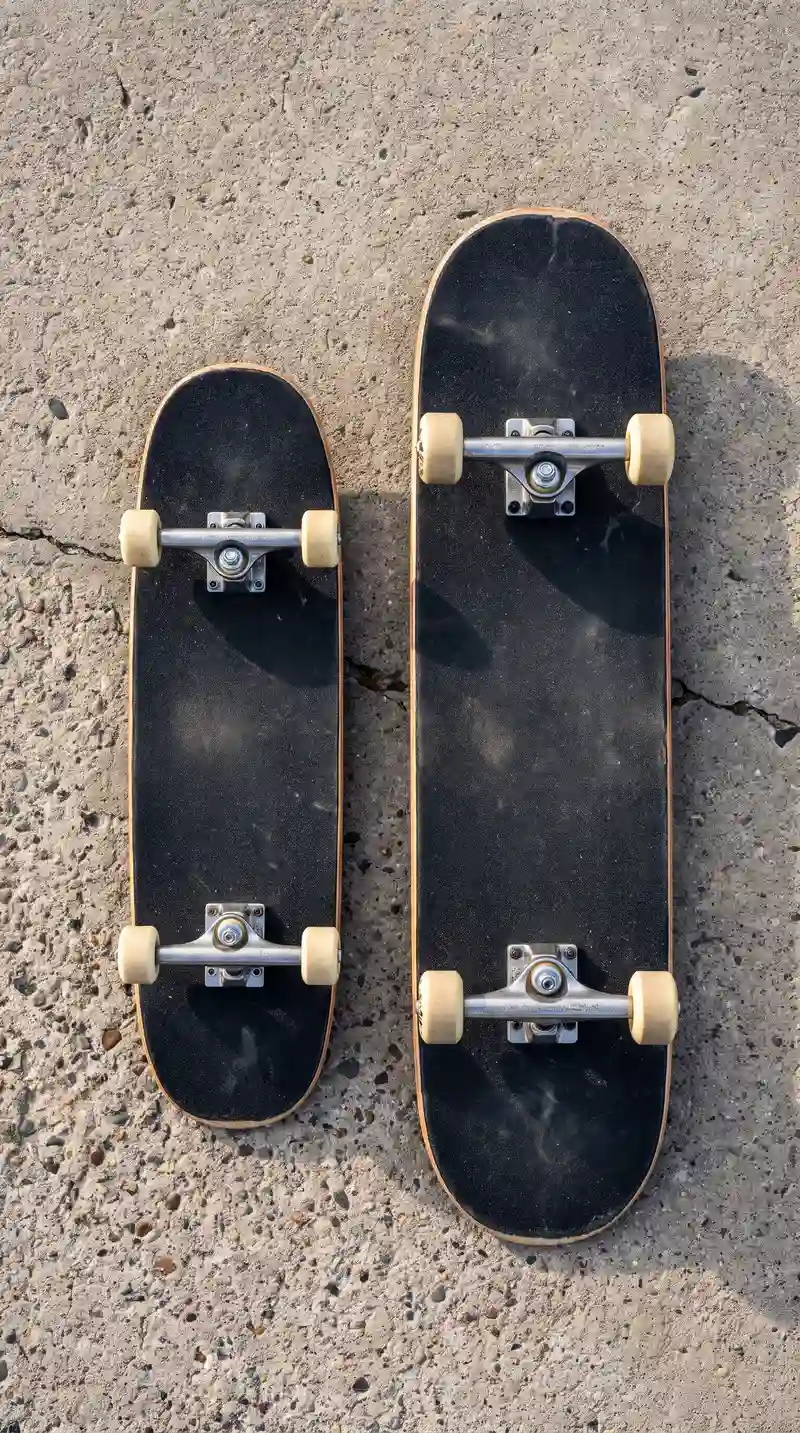
The biggest difference is the amount of platform available to the rider. A mini board prioritizes compact dimensions; a regular skateboard usually offers more room for foot placement and a more familiar setup for street skating. Neither is automatically better—the right choice depends on the rider and the job the board needs to do.
| Factor | Mini skateboard | Regular skateboard |
|---|---|---|
| Deck space | Often narrower or shorter; less room to reposition your feet | Usually more standing room for a wider range of riders |
| Portability | Generally easier to carry and store, depending on shape and weight | Usually takes up more space |
| Learning feel | Can feel lively or cramped; depends on wheelbase and rider fit | Often gives beginners more room to find a comfortable stance |
| Typical use | Compact casual riding, smaller riders or a specific mini-board style | Street skating, learning a broad range of tricks and general-purpose use |
| Setup options | Some parts may be less common or model-specific | Usually easier to find standard deck, truck and wheel options |
Remember that a mini cruiser and a regular street skateboard may be designed for different jobs. If you mainly want relaxed travel, read our skateboard vs. cruiser comparison before deciding. If you want to learn how deck shapes affect riding, our guide to different types of skateboard decks explains the main designs.
How to Choose the Right Mini Skateboard: A Step-by-Step Guide
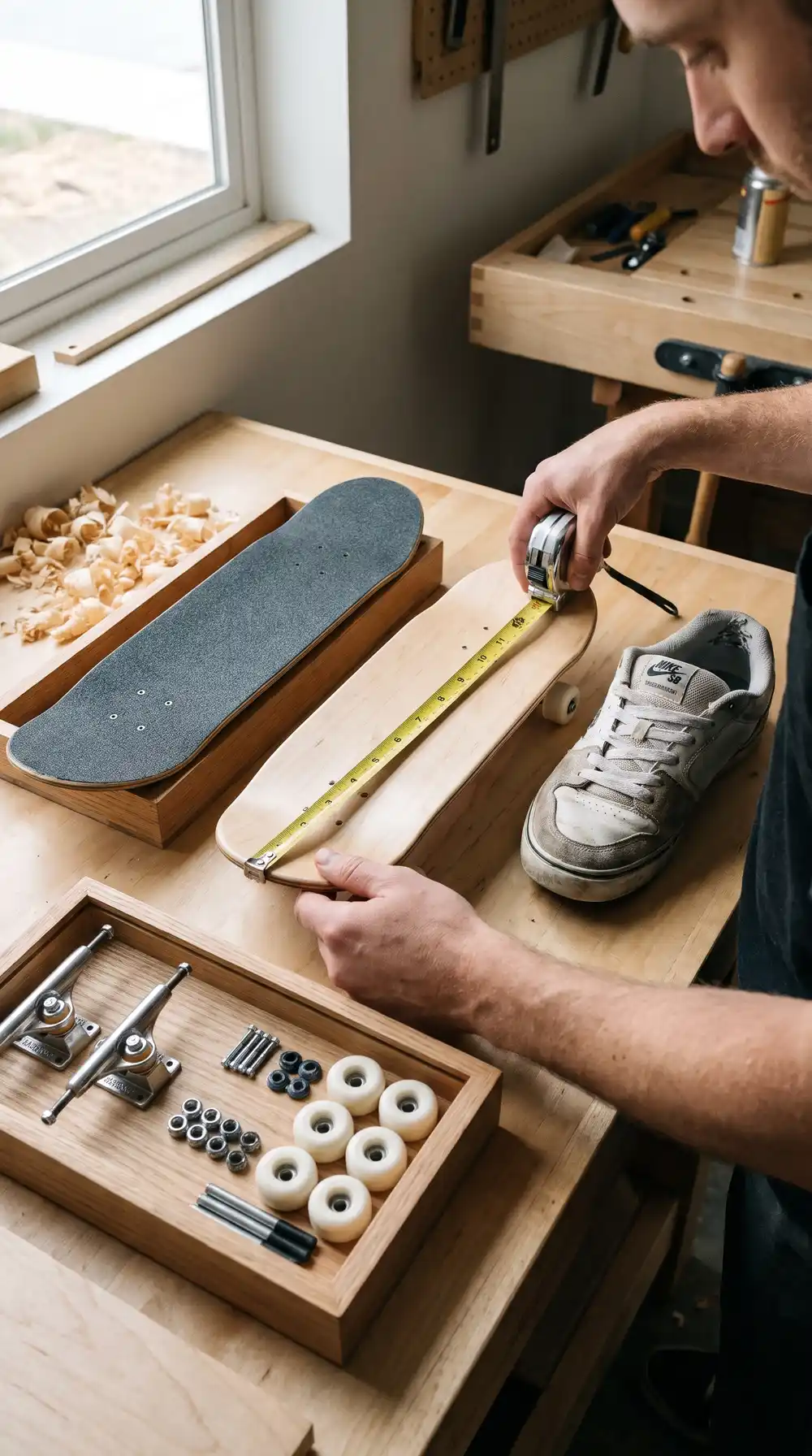
Use this checklist before buying. It keeps the decision focused on fit and intended use instead of a catchy product name.
1. Decide what you want the board to do
Write down the main use: learning to ride, short casual trips, carrying it between locations, or practising street tricks. A mini cruiser with soft wheels is not the same purchase as a compact double-kick street deck. Choose the style first, then compare sizes.
2. Match the deck to the rider
Compare deck width with shoe size and stance. The rider should be able to place both feet securely without feeling forced into an awkward position. If possible, stand on a similar-sized board before ordering. For children, check the manufacturer’s age and weight guidance as well as the dimensions.
3. Check length and wheelbase—not width alone
A short deck can still be wide, and a narrow deck can still be relatively long. Wheelbase also affects how the board turns and feels beneath the rider. If a listing does not provide a measurement you need, do not assume it from a product photograph.
4. Confirm that the components fit
The trucks should be suitable for the deck width and mounting pattern. Grip tape or a molded grip surface needs to provide enough traction across the usable standing area. Riser pads are not mandatory on every mini skateboard; they are used when the setup needs extra wheel clearance, often with larger wheels or a geometry that risks wheelbite. Do not add risers or change truck size without checking compatibility.
5. Match the wheels to the surface
Harder, smaller street wheels are commonly chosen for smooth skatepark surfaces and tricks. Softer cruiser wheels can be more comfortable on ordinary pavement, but the right choice depends on the board’s design and the route. Check the wheel diameter, hardness and clearance together rather than treating any one specification as a guarantee of ride quality.
6. Read the listing carefully before checkout
Confirm the exact model, deck dimensions, included trucks and wheels, whether the board arrives assembled, and the seller’s return terms. Product variants can differ. The following existing Amazon listings provide examples of different compact formats; they are specification references, not claims of personal testing or a ranking of the best boards.
As an Amazon Associate, I earn from qualifying purchases.
- Retrospec Quip Domino Mini Cruiser: listed at 22.5 × 6 inches, with an injection-molded plastic deck, 60mm soft polyurethane wheels and ABEC-7 bearings. Its narrow platform makes it an example to assess carefully for foot room.
- Magneto Music Mini Cruiser: listed at 27.5 × 7.5 inches, with a Canadian maple deck, double kicktails and 60mm / 78A cruiser wheels on the Music version. It is longer and wider than the Quip example.
- Eggboards Street Red Mini Longboard: listed at 19 × 9 inches, with a six-ply bamboo deck, a wide truck arrangement and 76A cruiser wheels on the Street Red version. It shows why a very short board is not necessarily a narrow one.
Specifications, variants and availability can change. Check the live listing for the exact size, colour and components before buying, and compare those details with the rider’s needs.
Common Mini Skateboard Buying Mistakes
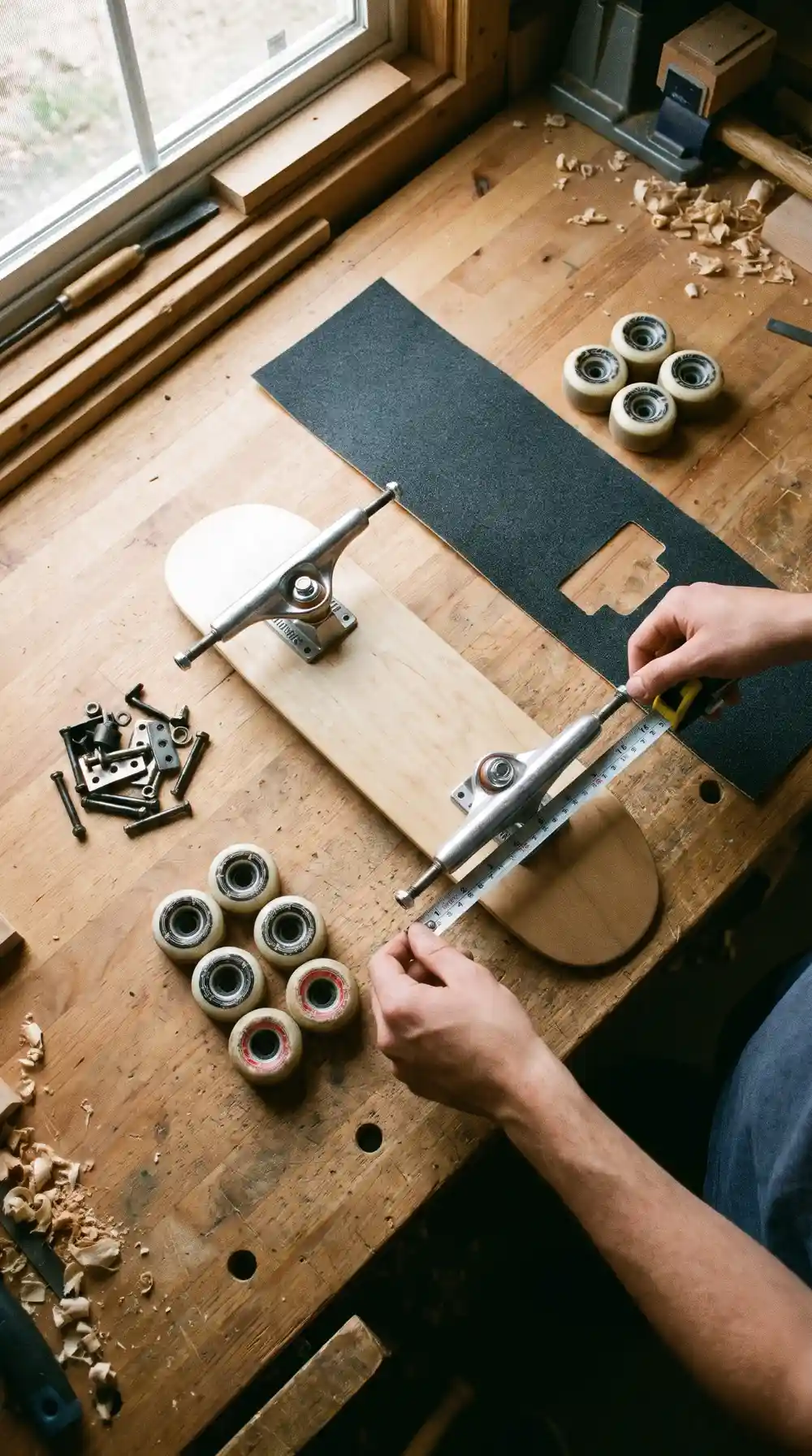
Most disappointing mini-board purchases come from treating “small” as a complete specification. Avoid these common mistakes:
- Choosing by age alone: Two children of the same age can have different shoe sizes, balance and riding experience.
- Looking only at deck length: Width, wheelbase and shape affect the usable platform and handling too.
- Assuming every mini board is a beginner board: Some are designed for casual cruising; others are toy-scale fingerboards or specialised setups.
- Ignoring truck compatibility: Trucks that are too wide or too narrow for the deck can create an awkward setup. Follow the deck or complete-board manufacturer’s guidance.
- Adding risers without a reason: Risers change ride height and may be needed for clearance, but they are not a universal upgrade. Check wheelbite risk and hardware length.
- Overlooking grip and foot placement: A compact deck still needs reliable traction and enough usable room for the rider’s shoes.
- Expecting a mini cruiser to behave like a trick board: Wheel size, hardness, deck shape and truck setup all influence what the board is built to do.
Before ordering, compare the product specifications with the rider’s actual use. If the listing is vague about deck size or components, keep looking rather than guessing.
Safety Tips Before Riding

A smaller deck does not remove the risks of skateboarding. A mini skateboard can still roll unexpectedly, catch on a crack or become unstable if the rider is not comfortable with its size. Start slowly and use a suitable practice area.
- Wear a properly fitted helmet. Wrist guards, elbow pads and knee pads add protection, especially while learning.
- Inspect the board before each session. Check that the trucks, axle nuts and mounting hardware are secure, and that the wheels spin freely without excessive play.
- Practise on flat, open ground. Learn to stand, push, turn and stop before moving to slopes, ramps or crowded areas.
- Keep away from traffic. Do not use a mini skateboard on busy roads or in places where the rider cannot see and respond to hazards.
- Avoid wet or loose surfaces. Water, gravel, leaves and damaged pavement can reduce control or catch a wheel.
- Supervise children. Choose a board that fits, set clear boundaries and make sure the child can control it before riding independently.
If a rider cannot comfortably balance, push and stop on a flat surface, step back to basic practice or choose a better-fitting board. Confidence should come from control, not from how small or lightweight the skateboard looks.
Frequently Asked Questions

Are mini skateboards good for adults?
They can be, but fit is the deciding factor. Adults with larger shoes or a preference for more standing room may find a very narrow mini deck cramped. A compact cruiser around a more generous width may suit some adults, while others will be more comfortable on a regular skateboard. Check the actual dimensions rather than relying on the label.
What size mini skateboard should a child get?
There is no single size that fits every child. Compare the deck width and length with the child’s shoe size, height, balance and experience, and follow the manufacturer’s guidance. If possible, let the child stand on a similar board before buying. Do not choose a very small deck simply because the rider is young.
Can you do tricks on a mini skateboard?
Some compact street skateboards can handle basic tricks, depending on their deck shape, trucks and wheels. A very narrow platform can make foot placement less forgiving, while many mini cruisers are designed mainly for rolling rather than technical flip tricks. Check what the board is built for.
Is a mini skateboard the same as a fingerboard?
No. A rideable mini skateboard is built to support a person’s weight and uses full-size riding components. A fingerboard is a small toy controlled with your fingers. Check the product dimensions and intended use before ordering.
Does a mini skateboard need riser pads?
Not automatically. Riser pads are used when a setup needs additional clearance between the deck and wheels, often to help reduce wheelbite. Whether they are needed depends on wheel size, truck geometry and the deck. Follow the manufacturer’s setup guidance and use suitable mounting hardware.
Is a 7.5-inch skateboard considered mini?
There is no universal definition. A 7.5-inch deck is commonly considered a narrow street-deck size, and some compact boards are listed at that width. In this guide, under 7.5 inches is a useful reference point for discussing narrow mini decks, not an official industry cutoff.
Related Skateboard Guides
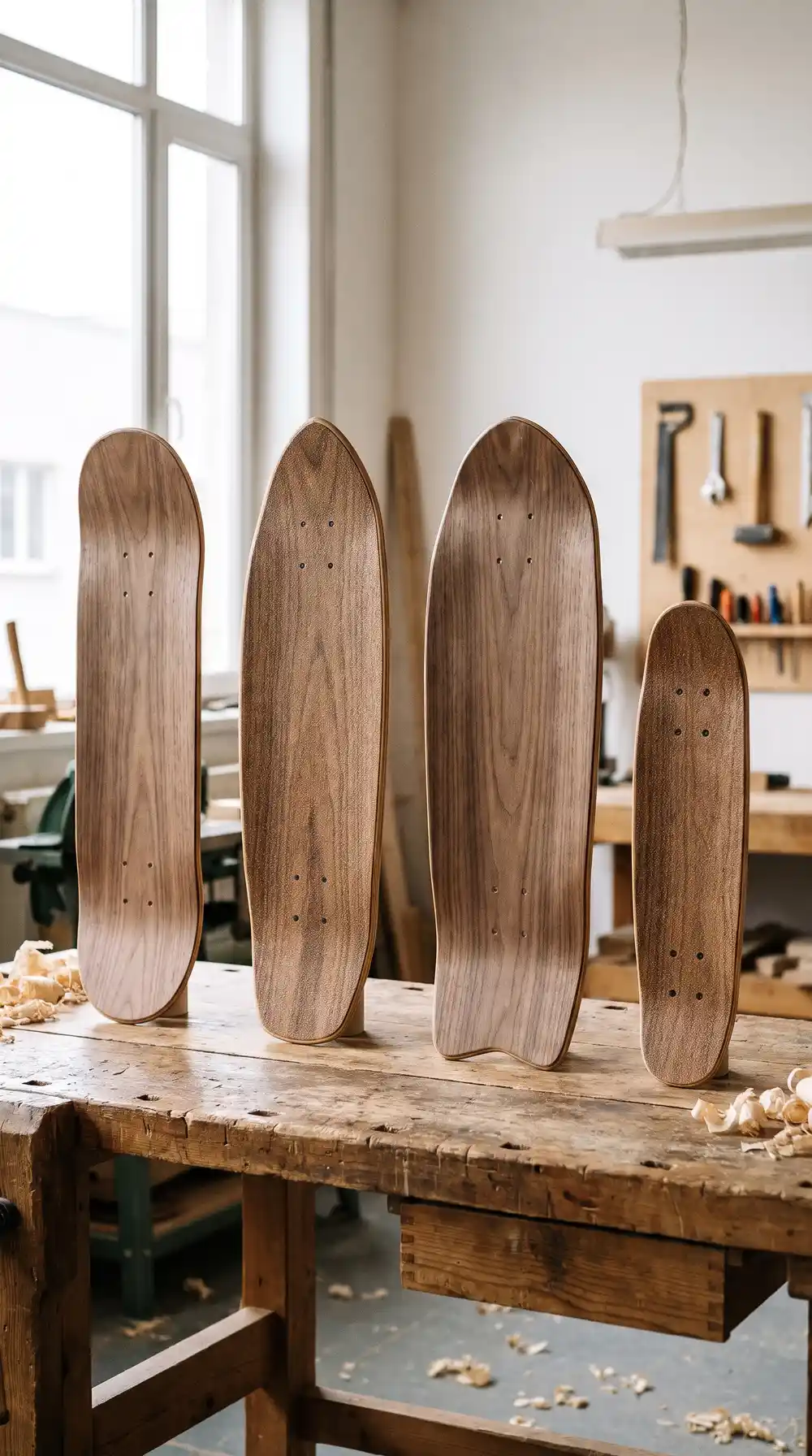
Choosing a mini skateboard is easier when you understand the wider range of deck shapes and setup options. Continue with these related guides:
- The Ultimate Guide to Finding the Perfect Skateboard Size — compare deck widths and choose a size that fits the rider.
- 12 Different Types of Skateboard Decks and Styles — understand how deck shape and purpose vary.
- Skateboard Deck Concave Explained — learn how low, medium and high concave affect the feel of a deck.
- Skateboard vs. Cruiser: Key Differences — decide whether a street board or cruiser better matches your riding plans.
Final Thoughts

A mini skateboard makes sense when its compact size solves a real problem: a smaller rider needs a better-fitting platform, a skater wants something easier to carry, or the goal is relaxed riding on a suitable route. The benefit is portability and a different feel—not a guarantee of easier learning or better control.
Before choosing one, compare deck width, length, wheelbase, truck fit and wheel clearance. Make sure the rider has enough room for a stable stance, and match the setup to the surface and style of riding. If the board feels cramped or the intended use involves speed, rough ground or technical progression, a regular skateboard or purpose-built cruiser may be the smarter choice.
The best mini skateboard is not simply the smallest one. It is the compact board that fits the rider, the setup and the way it will actually be used.