I had an old skateboard deck lying around that I kept moving from one corner of the garage to another.
It was too worn out to ride properly, but it still looked cool. The graphic was scratched, the tail had seen better days, and the grip tape was almost smooth in the middle. I didn’t want to throw it away because it had that “used for real” look that new decor never has.
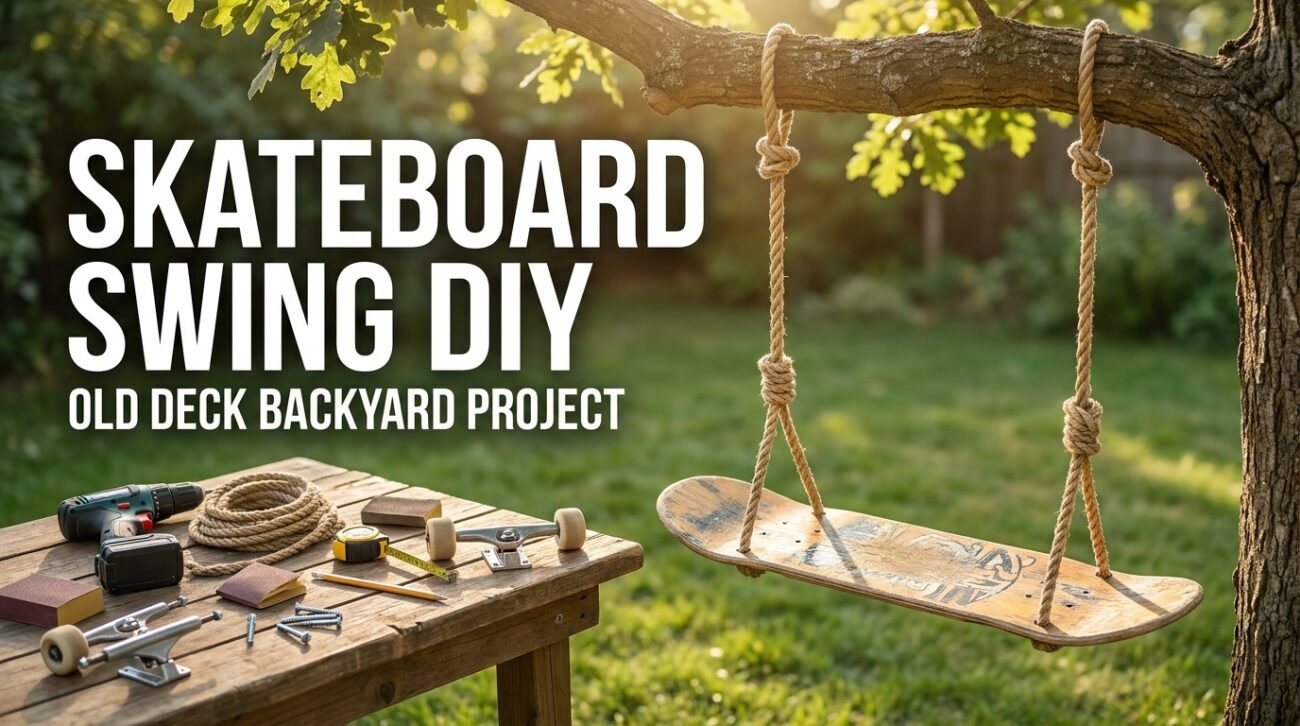
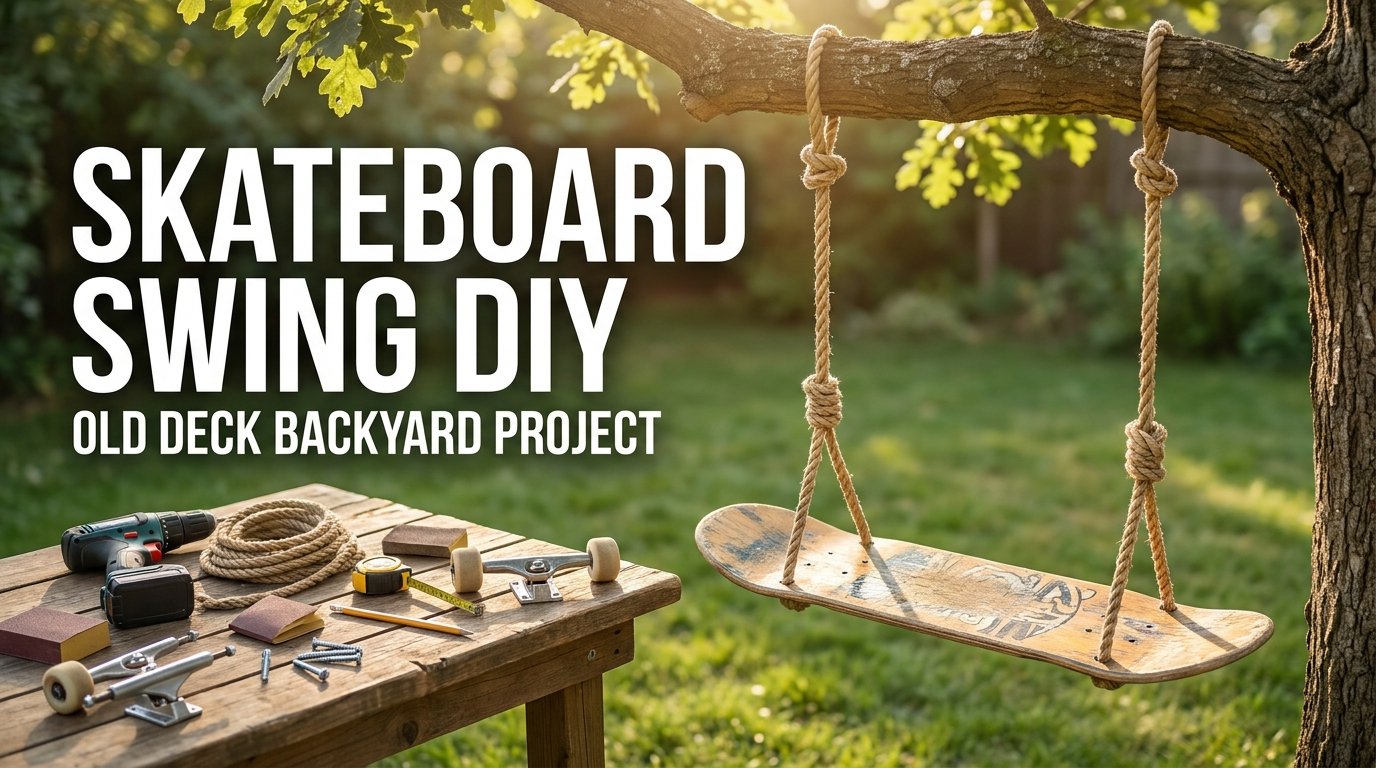
One weekend, I decided to turn it into a backyard swing.
At first, it sounded like one of those projects that looks easy online but becomes annoying halfway through. And honestly, there were a few small mistakes. The first rope I used was too thin. I also drilled one hole slightly off-center, which made the deck hang a little crooked. But after fixing the setup, the final swing looked awesome and felt surprisingly fun.
A skateboard swing DIY project is a great way to reuse an old deck, especially if you want something different from the usual wall art or shelf idea. It works well for a backyard, patio, garage hangout area, tree branch setup, or even a covered porch.
But because this project involves sitting weight, rope, and hanging hardware, safety matters a lot. This is not just decoration. You need a strong deck, strong rope, secure knots, and a reliable hanging point.
Why Use a Skateboard Deck for a Swing?
Table of Contents
A skateboard deck already has a nice shape for a small swing seat. It is curved, compact, and strong enough for riding when it is in good condition. That makes it a fun base for a simple backyard swing.
The shape also gives the swing personality. A plain wooden swing seat works fine, but an old skateboard deck has scratches, graphics, grip tape, and a story behind it.
This project is especially good if you have:
- An old deck you no longer ride
- A scratched deck with a cool graphic
- A broken setup but usable deck
- Extra rope from another project
- A backyard tree or strong support beam
- A kid or teen room/play area theme
Just remember, not every old skateboard deck is safe for a swing. Some decks look okay from far away but have weak layers, cracks, or splits.
Safety First: Check the Deck Carefully
Before doing anything, inspect the deck.
Look near the truck holes, the nose, the tail, and the middle standing area. If the wood layers are separating, do not use it as a swing seat. If there is a deep crack across the deck, skip it. If the deck feels soft or flexes strangely, use another board.
A skateboard deck used as a swing will hold weight differently than when used for riding. When riding, your weight moves across the board with trucks underneath. As a swing, the rope pulls from drilled holes or mounted points. That stress can be different.
For a child’s swing, you still need strong materials. For an adult, be extra careful. If you are unsure about the strength, use a proper wooden swing seat instead and keep the skateboard deck as decoration.
Best Type of Skateboard Deck to Use
A standard skateboard deck works best for this project.
It is wide enough to sit on, not too long, and easy to drill. Cruiser decks can work too, but some cruiser shapes are narrow or uneven. Longboard decks can make a wider swing, but they need stronger rope and more careful hanging.
Try to use a deck that is:
- Solid
- Not cracked
- Not water-damaged
- Not badly warped
- At least wide enough to sit comfortably
- Not splitting near the edges
If the deck has grip tape on top, you can leave it. It helps prevent slipping. But if the grip tape is peeling or rough in a bad way, trim it or remove it.
Tools and Materials You Need
You do not need expensive tools for a basic skateboard swing, but you do need the right materials.
Here is a simple list:
- Old skateboard deck
- Strong outdoor rope
- Drill
- Drill bits
- Measuring tape
- Pencil
- Sandpaper
- Strong carabiners or swing hooks
- Washers, optional
- Lighter or tape for rope ends
- Level, optional
- Tree straps or hanging hardware
- Safety gloves
- Safety glasses
For rope, avoid thin craft rope. Use strong outdoor rope made for weight-bearing use. Nylon or polyester rope is usually better outdoors than weak decorative rope.
If you are hanging the swing from a tree, tree straps are often better than wrapping rope directly around the branch. They spread pressure better and can be safer for the tree.
Step 1: Remove the Trucks and Wheels
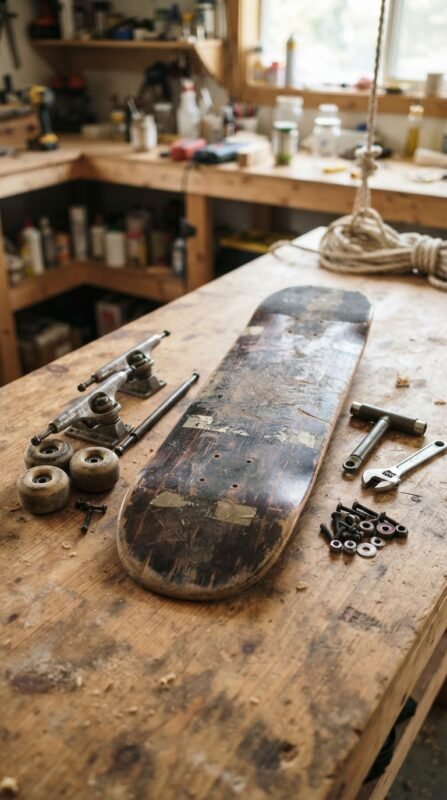
Start by removing the trucks and wheels from the deck.
Use a skate tool or wrench to remove the hardware. If the bolts are rusty, take your time. Don’t force them too hard because old hardware can strip.
Once the trucks are off, clean the area around the old truck holes.
You can keep the trucks and wheels for another project. I like saving old trucks because they can become wall hooks, garage decor, or parts for another board later.
Step 2: Clean and Sand the Deck
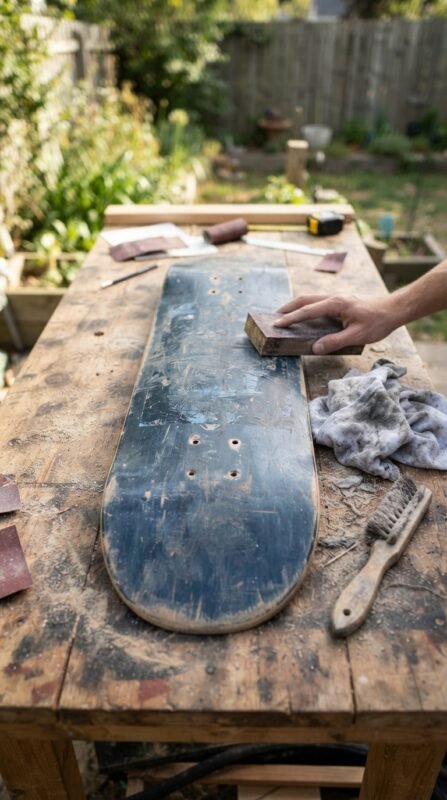
Wipe the deck with a dry cloth first. If it is dusty or muddy, use a slightly damp cloth on the graphic side, but do not soak the wood.
If the edges are rough, sand them lightly. This matters because people will be sitting on the deck and holding the ropes. Rough edges can scratch hands or clothing.
Also check the grip tape. If it is too sharp on the edges, sand or trim the sides carefully.
The goal is not to make the deck look brand new. A used deck looks better for this project. You just want it clean and safe to touch.
Step 3: Decide Where the Rope Holes Will Go
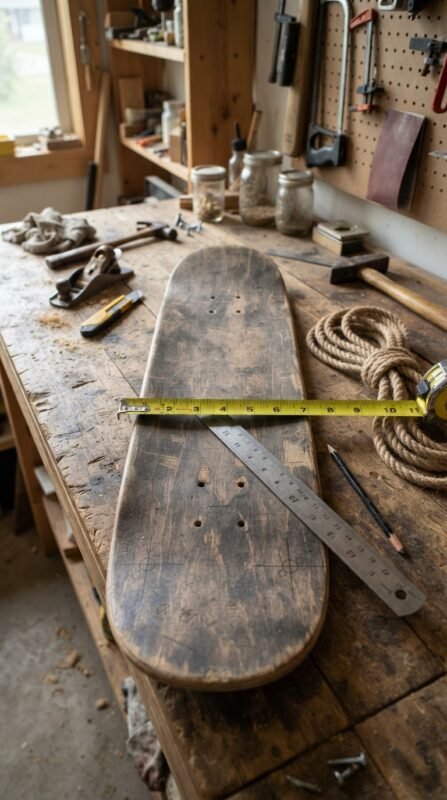
This is one of the most important parts.
You need four rope holes: two near one end and two near the other end. These holes hold the ropes that support the swing.
Do not drill too close to the edges. If the holes are too close to the side, the wood can crack under pressure. Also avoid drilling through weak or damaged areas.
A good starting point is to place the holes a few inches in from each end and evenly spaced from the sides.
Use a measuring tape and pencil to mark the spots. Measure twice before drilling. Trust me, a hole that is even half an inch off can make the swing hang weird.
Step 4: Drill the Rope Holes
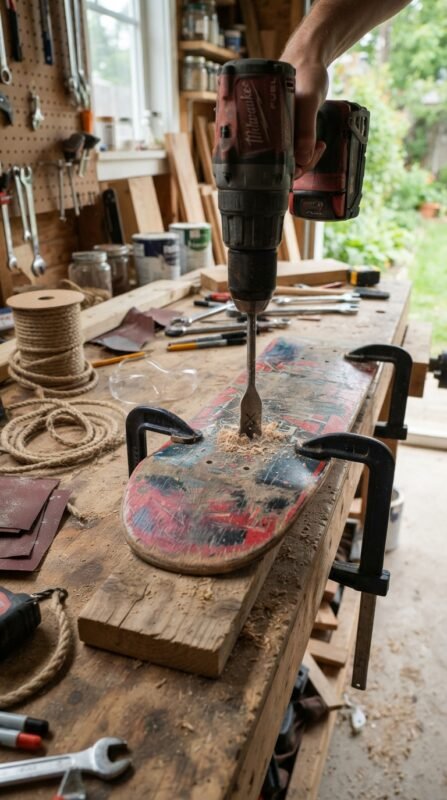
Choose a drill bit that matches the rope thickness.
The rope should pass through the holes without being forced, but the holes should not be too oversized. If the hole is huge, the deck may lose strength around that area.
Drill slowly and keep the drill straight. Place scrap wood under the deck if you can. This helps reduce splintering when the drill bit comes through the other side.
After drilling, sand the hole edges. Sharp hole edges can wear down the rope over time.
This small step is easy to skip, but don’t skip it.
Step 5: Cut the Rope
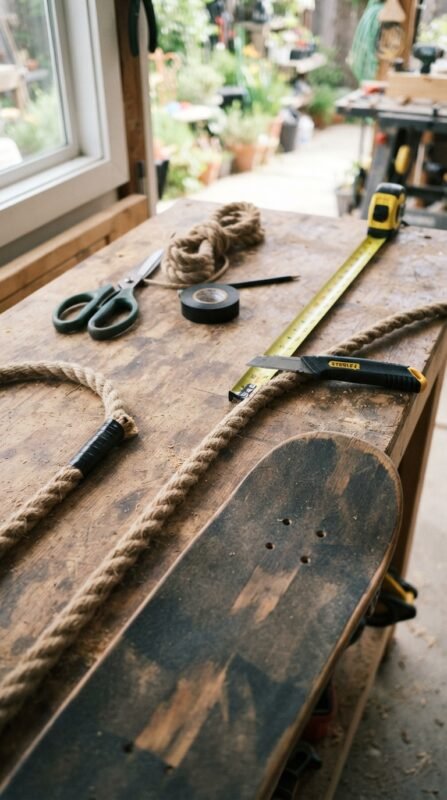
Cut two long rope pieces.
Each rope will go down through one hole, under or through the deck setup, and back up through another hole depending on your rope method. Some people use four separate ropes, but two long ropes often create a cleaner look.
The rope length depends on your hanging point. If the swing is hanging from a tree branch, measure from the branch down to the seat height, then add extra length for knots.
Always cut more rope than you think you need. You can trim extra later, but you cannot add length once it is too short.
For most backyard swings, it is better to leave the seat low enough to sit on comfortably.
Step 6: Thread the Rope Through the Deck
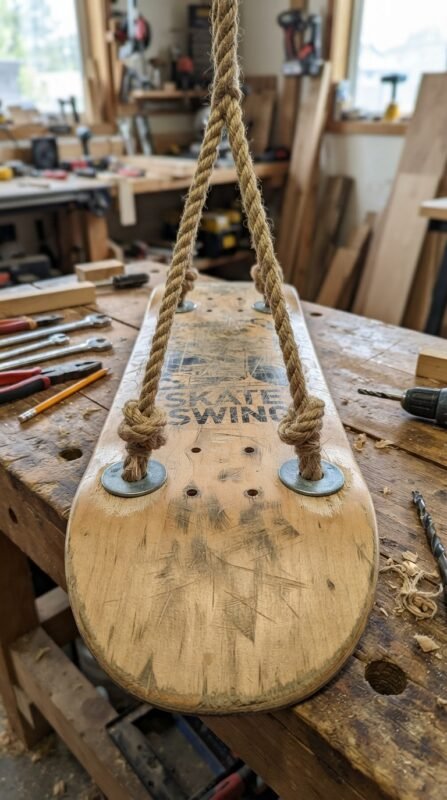
Thread the rope through the holes carefully.
Make sure both sides are even. If one side has more rope than the other, the swing will tilt.
You can use knots under the deck to hold the rope in place. Large stopper knots work well. Some people also use washers to help spread pressure around the holes.
If your rope is slippery, use strong knots and test them carefully.
Do not rely on weak knots or quick loops. The whole swing depends on these connections.
Step 7: Tie Strong Knots
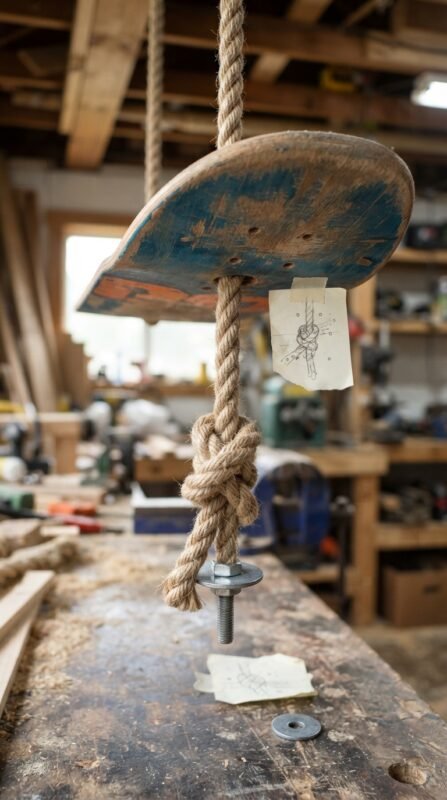
This is where safety really matters.
Use reliable knots that tighten under load and do not slip easily. A figure-eight knot or double overhand stopper knot can work well for rope ends. For hanging connections, use knots suitable for your rope and hardware.
After tying knots, pull on them hard to test. If they slide, loosen, or look messy, redo them.
One mistake I made early was tying knots that looked tight but shifted when weight was added. That is not good enough for a swing.
If you are not confident with knots, use proper swing hardware, carabiners, and pre-made hanging straps.
Step 8: Choose a Strong Hanging Point
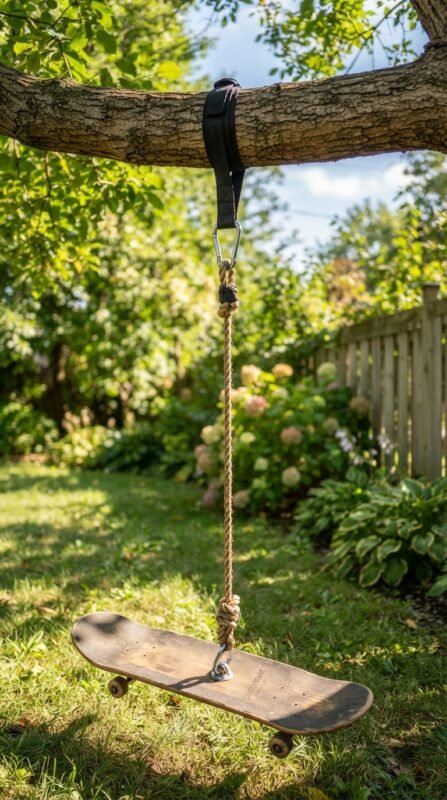
A swing is only as safe as what it hangs from.
If you are using a tree branch, choose a healthy, thick branch. Avoid dead branches, cracked branches, or branches that move too much. The branch should be strong and high enough for safe swinging.
If you are using a porch beam or garage beam, make sure it is structural and can handle weight. Do not hang a swing from weak decorative wood.
For tree setups, tree swing straps are a good option. They are easier to install and usually safer than tying rope directly around the branch.
When in doubt, ask someone experienced with hardware or outdoor structures before hanging the swing.
Step 9: Hang the Skateboard Swing
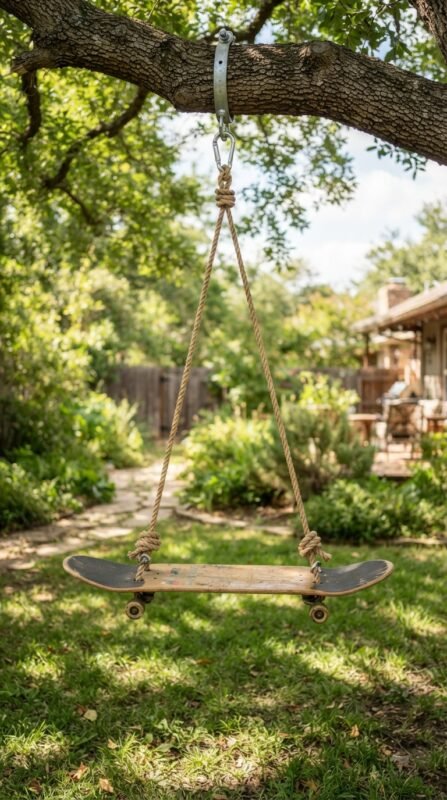
Attach the ropes to the hanging point using your chosen method.
Before sitting on it, step back and check if the deck is level. Adjust the rope lengths if needed.
Keep the swing low for the first test. Place it only a short distance above the ground so if something slips during testing, it is less risky.
Pull down on the deck with your hands. Then press down with some weight. Listen for cracking, rope slipping, or hardware movement.
Do not let anyone use it until it feels secure.
Step 10: Test It Slowly
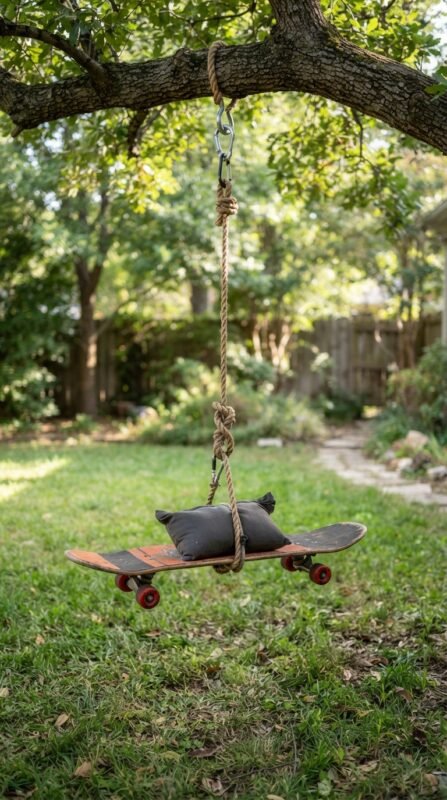
Testing is not the exciting part, but it is important.
Start with light pressure. Then sit gently. Do not jump onto it. Do not swing high at first.
Check the rope holes after the first test. Look for cracks or rope wear. Check the knots again. Check the hanging point.
If everything looks stable, use it carefully.
For kids, an adult should inspect the swing regularly. Outdoor rope and wood can wear over time, especially in rain and sun.
Optional: Add Handles
A skateboard deck is narrow compared to a normal swing seat, so handles can make it easier to balance.
You can add side ropes as handles or use the main ropes as handholds. Make sure the rope height is comfortable.
For kids, handles are a good idea. They help with stability and make the swing feel safer.
Just avoid adding anything sharp or hard near the sitting area.
Optional: Paint or Seal the Deck
If the swing will stay outdoors, sealing the deck can help protect the wood.
Use an outdoor clear coat or waterproof wood sealer. This will not make the deck indestructible, but it can help it last longer.
If you want a custom look, paint the bottom side before sealing it. You can add stripes, flames, simple patterns, or keep the original scratched graphic.
Let paint or sealer dry completely before adding rope.
Where to Hang a Skateboard Swing
Good places include:
- Backyard tree
- Covered patio
- Porch beam
- Garage hangout area
- Play area
- Garden corner
- Outdoor skate-themed space
Avoid hanging it over concrete if kids will use it. Grass, mulch, or a soft outdoor surface is safer.
Also leave enough space around the swing. Do not hang it too close to walls, fences, furniture, or sharp objects.
Common Mistakes to Avoid
The first mistake is using a damaged deck.
A cracked or split deck may look cool, but it is not safe as a swing seat.
The second mistake is using weak rope. Decorative rope is not the same as weight-bearing rope.
Another mistake is drilling holes too close to the edge. This can cause cracks when weight is added.
Do not hang the swing from a weak branch. A strong deck and rope will not help if the branch fails.
Also, do not skip regular checks. Outdoor swings need inspection. Rope can fray, knots can tighten or shift, and wood can weaken over time.
Is a Skateboard Swing Good for Adults?
It can be, but only if the setup is strong enough.
For adults, use a very solid deck, heavy-duty rope, strong hardware, and a reliable hanging point. Keep the swing low and test carefully.
Still, skateboard decks are narrow. They may not be comfortable for everyone. This project is often better for kids, teens, light lounging, or decorative backyard use.
If the swing will be used heavily, a proper wooden swing seat may be safer.
How Much Does This Project Cost?
If you already have an old skateboard deck, this project can be pretty affordable.
The main costs are rope, hardware, and maybe a sealer. If you already have tools, you may only need a few supplies.
Do not try to save money on rope or hanging hardware. Those parts matter most.
Cheap paint is fine. Cheap weak rope is not.
Final Thoughts
A skateboard swing DIY project is a fun way to give an old deck a second life.
It looks cool, feels personal, and adds something playful to a backyard or hangout space. But unlike a wall shelf or lamp, this project needs extra care because someone will actually sit on it.
Use a strong deck. Use proper rope. Drill clean holes. Tie secure knots. Hang it from a safe support. Test everything slowly.
If you do it carefully, that old skateboard sitting in the garage can become a backyard swing with a lot more personality than anything store-bought.