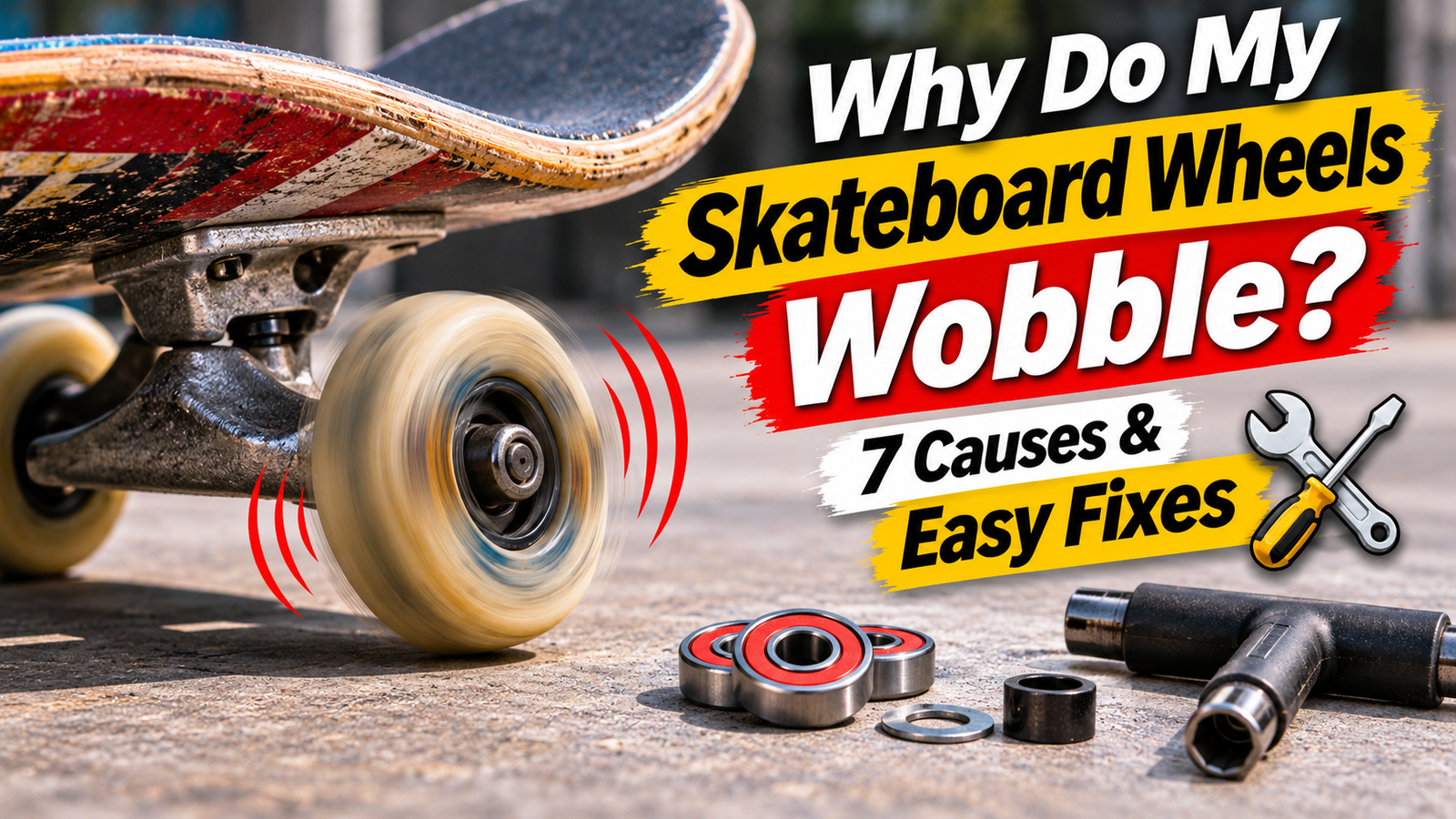
You’ve just finished setting up your skateboard, tightened everything, and placed it on the ground. But when you lift the board and spin one of the wheels, something looks off.
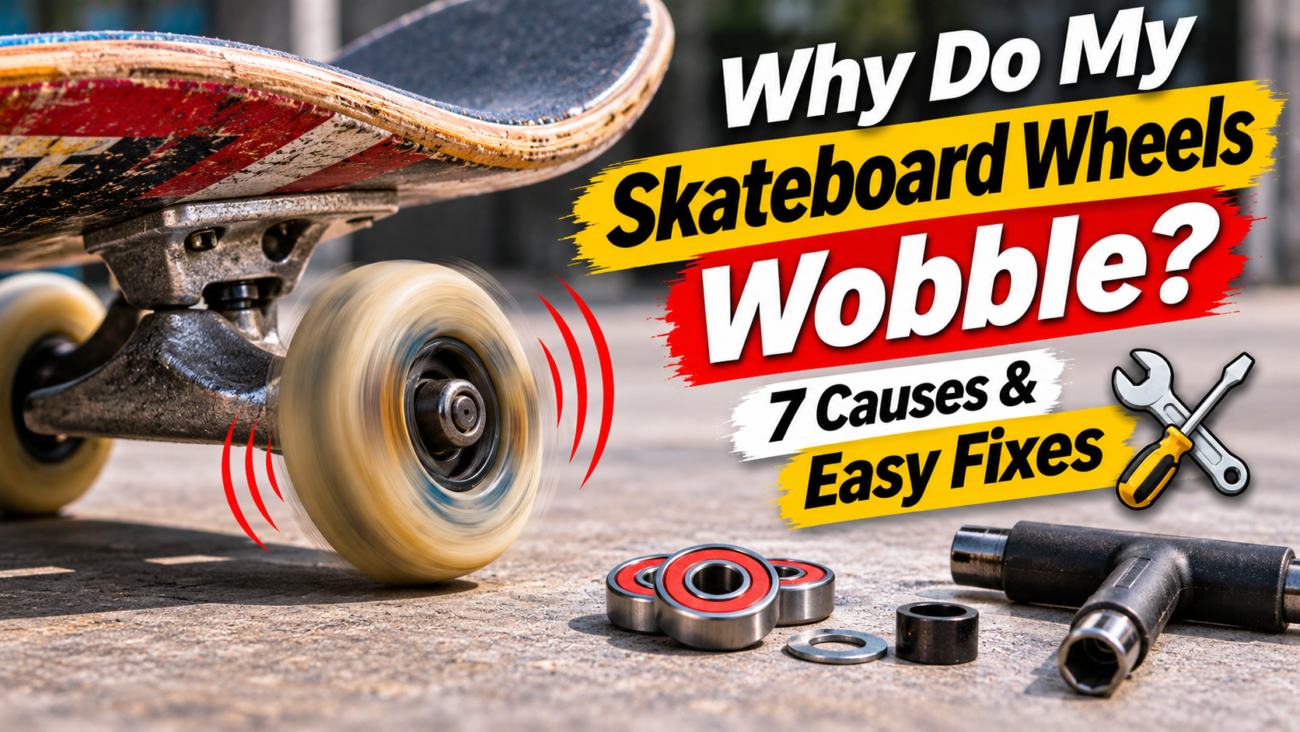
Instead of spinning smoothly, the wheel seems to move from side to side.
Maybe there’s a slight clicking sound. Maybe one wheel looks crooked while the others seem perfectly normal. Or perhaps you’ve noticed the problem while riding, especially when picking up speed.
It’s tempting to grab a skate tool and tighten every nut you can find. But that can make things worse if you haven’t identified the actual problem.
Skateboard wheel wobble can come from several places, including loose hardware, worn bearings, bent axles, and damaged wheels. Sometimes the movement is harmless wheel vibration. Other times, it’s a warning that a component needs attention before you ride again.
The important part is figuring out what’s moving and why.
This guide walks through seven common causes, explains how to check each one, and shows you which fixes are reasonable to try at home.
Is Your Skateboard Wheel Actually Wobbling?
Before reaching for any tools, make sure you’re looking at the right problem.
A wheel can appear to wobble even when its axle and bearings are functioning normally. On the other hand, a wheel that shifts noticeably from side to side may indicate loose hardware or damaged components.
There are three different symptoms worth distinguishing.
Side-to-Side Wheel Movement
This is when a wheel moves laterally along its axle or appears to tilt while spinning.
Possible causes include excessive axle-nut clearance, bearing problems, or an uneven wheel.
Uneven Wheel Rotation
Sometimes a wheel doesn’t visibly move along the axle, but its outer edge rises and falls slightly as it spins.
This may happen because the wheel is out of round, unevenly worn, or damaged.
Speed Wobble While Riding
Speed wobble is different.
It usually refers to the skateboard’s trucks oscillating from side to side while the rider is moving, particularly at higher speeds.
Truck looseness, riding technique, terrain, and board setup can all contribute.
Important: If the entire board shakes while you’re riding, don’t assume a wheel bearing is responsible. Stop safely and inspect the setup before riding again.
Table of Contents
7 Common Causes of Skateboard Wheel Wobble
The best troubleshooting method is to start with simple checks and only move toward component replacement when the evidence points there.
1. Loose Axle Nuts
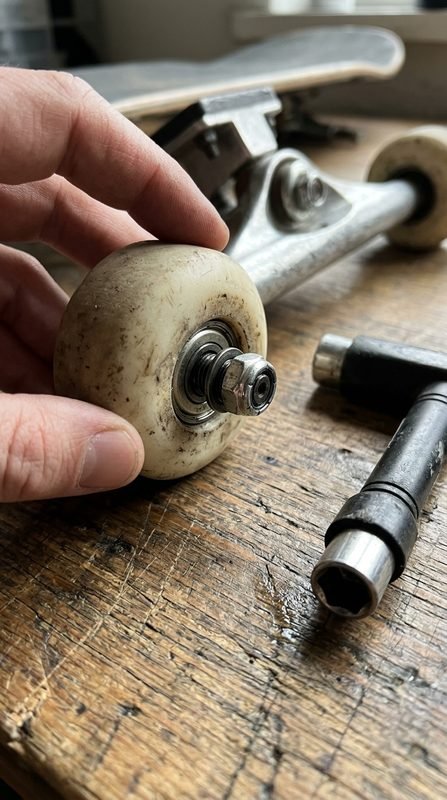
One of the first things to inspect is the axle nut holding the wheel in place.
Each skateboard wheel sits on an axle extending from the truck. A nut secures it while allowing the wheel and bearings to rotate.
If that nut has loosened excessively, the wheel may move farther along the axle than intended.
You might notice a clicking sound when moving the wheel sideways with your fingers.
How to check:
- Place your skateboard upside down on a stable surface.
- Hold one wheel between your fingers.
- Gently move it from side to side.
- Compare the movement with the other three wheels.
- Check whether the axle nut appears unusually loose.
How to fix it:
Use the axle-nut socket on a skateboard T-tool to adjust the nut carefully.
The goal is to secure the wheel assembly while allowing the wheel to spin freely.
Don’t keep tightening once the wheel begins binding. Excessive tightening can create unnecessary bearing pressure and reduce smooth rotation.
A tiny amount of lateral movement can be normal on some setups, especially without bearing spacers. The amount of acceptable movement depends on the wheel, bearing, spacer, and axle configuration.
If the nut cannot remain securely fastened, inspect its locking insert and threads. Replace damaged or worn hardware rather than relying on repeated tightening.
2. Worn or Damaged Bearings
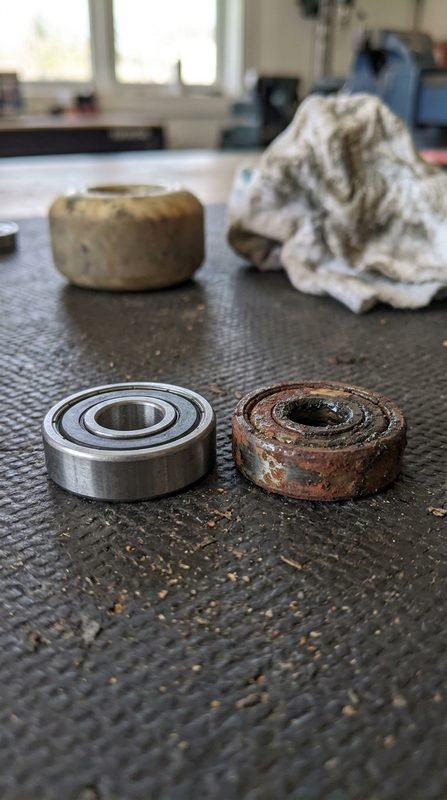
Skateboard bearings allow the wheels to rotate around the axle.
Most standard skateboard wheels use two 608-size bearings per wheel.
Over time, bearings can become contaminated, corroded, or physically damaged.
A worn bearing may feel rough, produce grinding noises, or develop unusual play.
However, a noisy bearing doesn’t automatically explain visible wheel wobble. You need to check whether the bearing itself has excessive movement or damage.
Signs to look for:
- Grinding or clicking during rotation
- Rough or inconsistent spinning
- Visible corrosion
- Excessive movement between bearing components
- Damaged shields or bearing races
How to check:
Remove the wheel using an appropriate skate tool.
Inspect the bearings for visible damage and check whether they rotate smoothly.
You can carefully remove serviceable bearings for maintenance, but don’t force tools against the shields or bearing races.
How to fix it:
If the bearings are simply dirty and designed to be serviced, clean and lubricate them according to the manufacturer’s instructions.
Use a lubricant intended for skateboard bearings.
If a bearing is cracked, badly corroded, unusually loose, or visibly damaged, replacement is generally the safer option.
Avoid trying to repair a damaged bearing by applying excessive pressure.
3. Bent Skateboard Truck Axles
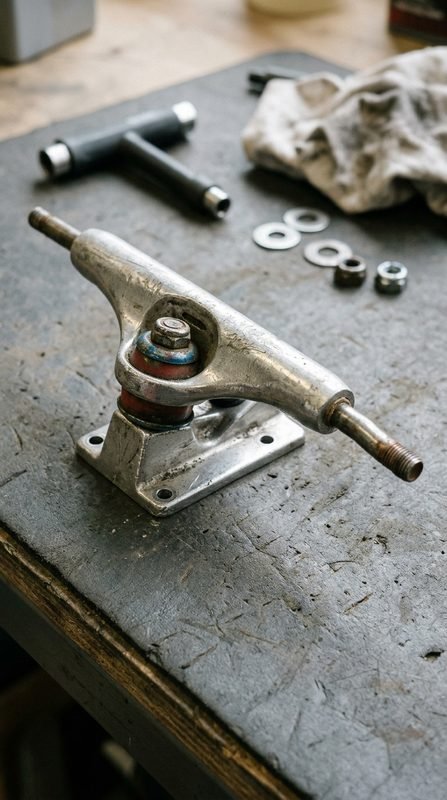
A bent axle is a more serious possibility.
The axle is the metal shaft that passes through the truck hanger and supports the wheels.
If the axle becomes bent, the wheel may sit at an unusual angle or appear to move unevenly as it rotates.
Heavy impacts, collisions, or damaged equipment can contribute to axle problems.
How to check:
- Remove the affected wheel.
- Inspect the exposed axle for visible bending or damaged threads.
- Compare its alignment with the opposite side.
- Look for unusual wear or damage where the wheel normally sits.
A slight bend isn’t always easy to identify by eye.
If the wheel repeatedly appears misaligned after you’ve ruled out bearing and wheel problems, have the truck inspected by an experienced skateboard technician.
How to fix it:
A damaged axle often means replacing the affected truck or another manufacturer-approved component.
Don’t attempt to straighten a bent axle with a hammer, vise, or improvised tools.
That may weaken the metal or create additional alignment problems.
When to stop riding: If an axle is visibly bent, cracked, or damaged, don’t continue using the skateboard until the problem has been properly resolved.
4. Unevenly Worn or Damaged Wheels
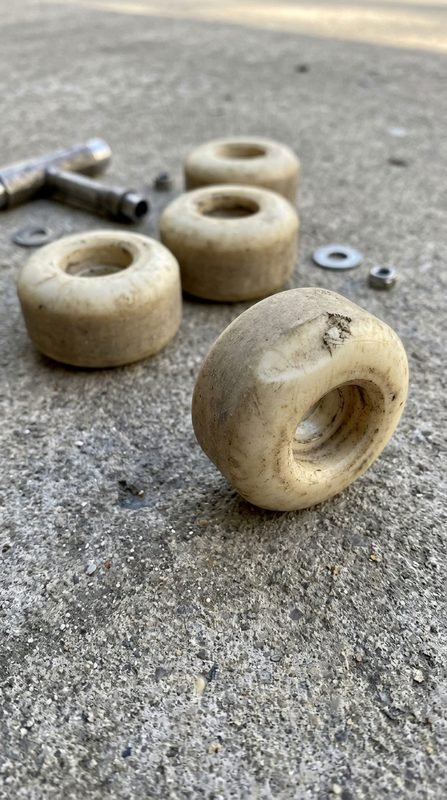
Skateboard wheels don’t always wear perfectly evenly.
Repeated powerslides, rough pavement, hard impacts, and ordinary use can change their shape over time.
A wheel with a flat spot may produce a repeated thumping or vibrating sensation.
Another wheel might have a visible chunk missing from its outer edge.
When you spin a damaged wheel, the outer surface can appear to rise and fall rather than rotating in a perfectly consistent circle.
How to check:
Remove the wheel and inspect its entire rolling surface.
Look for:
- Flat spots
- Cracks
- Missing chunks
- Significant uneven wear
- Deformation around the bearing seat
Rotate the wheel slowly in your hands and examine its shape.
How to fix it:
Minor cosmetic wear may not require immediate replacement.
However, a cracked wheel, badly damaged bearing seat, large flat spot, or substantial deformation should be treated seriously.
Replace wheels with structural damage or wear that noticeably affects control.
Rotating wheel positions periodically can help distribute certain wear patterns, but it won’t restore a wheel that is already badly damaged.
5. Bearings That Aren’t Fully Seated
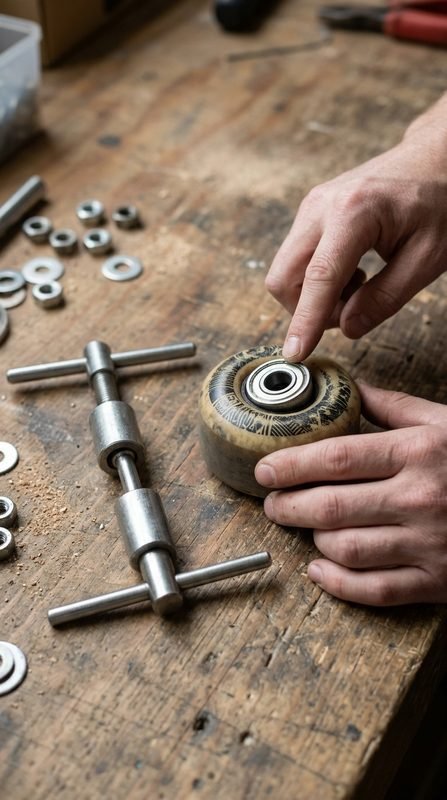
A wheel contains two bearings, usually installed from opposite sides.
For the wheel to rotate properly, each bearing must sit correctly in its designated bearing seat.
If one bearing is crooked or incompletely seated, the wheel assembly may not align as intended.
This can happen during bearing installation, particularly if excessive force is used at an angle.
How to check:
- Remove the wheel from the truck.
- Look at both bearing positions.
- Check whether the bearings appear evenly seated.
- Inspect the wheel’s bearing seats for cracks or deformation.
Do not assume a bearing is installed incorrectly just because a small part of its outer edge remains visible. Wheel designs vary.
How to fix it:
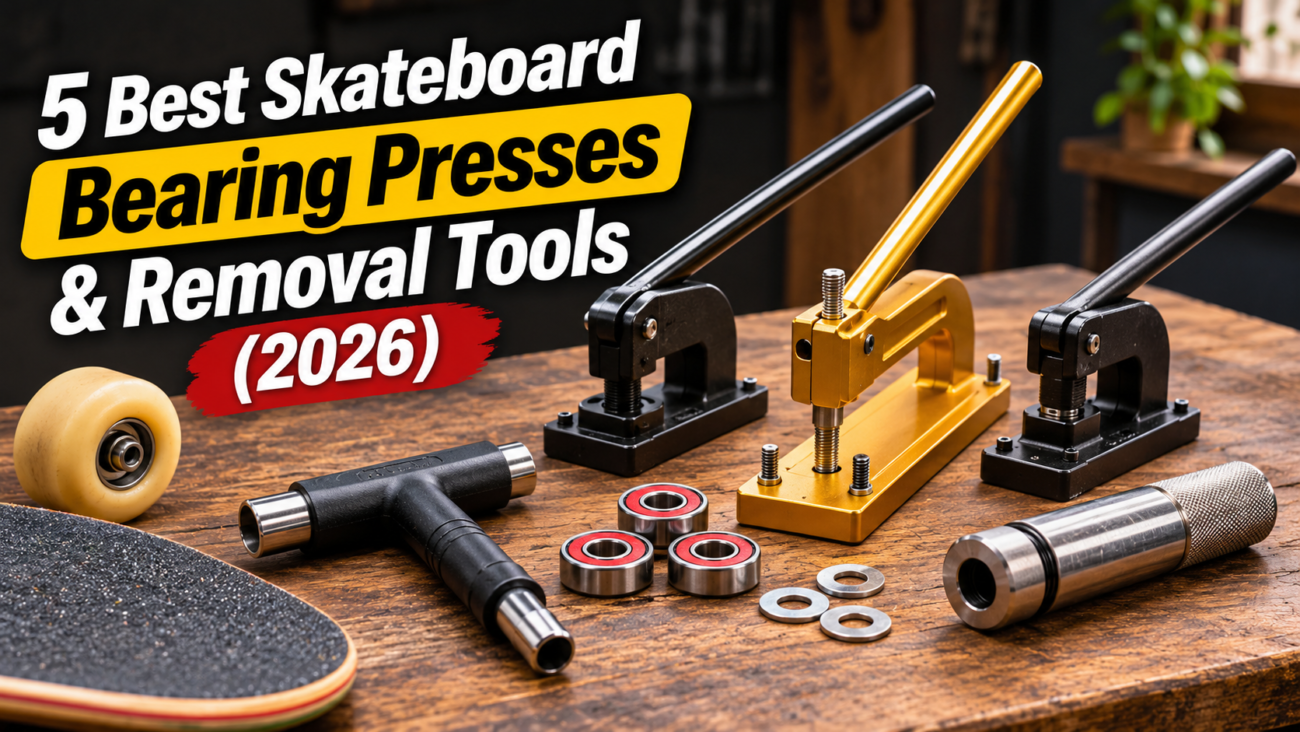
Use an appropriate bearing press or a compatible axle-based installation method to seat the bearing correctly.
Apply force evenly to the bearing’s outer race when installing it into the wheel, following the bearing and wheel manufacturers’ guidance.
Avoid pressing directly on the bearing shield or forcing a bearing into a damaged seat.
If the wheel’s bearing seat is cracked or distorted, installing another bearing may not solve the problem. The wheel itself may need replacement.
6. Incorrect Bearing Spacers or Speed Washers
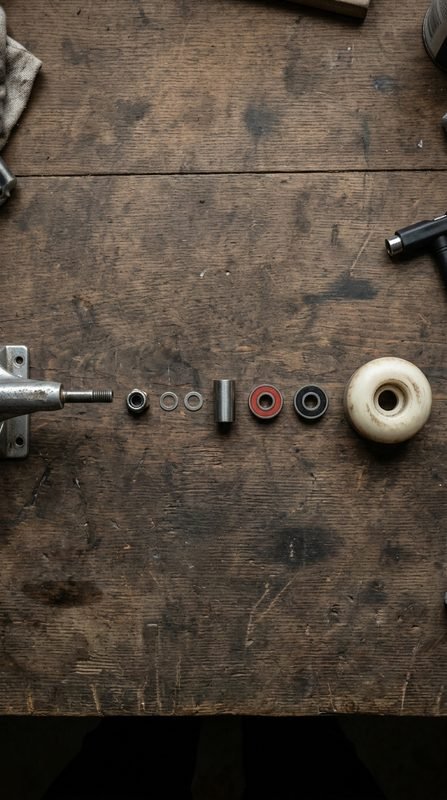
Small hardware pieces can make a noticeable difference to a skateboard’s wheel assembly.
Some setups use bearing spacers between the two bearings inside each wheel.
Speed washers are thin washers typically placed on the axle at the sides of the wheel assembly.
These components serve different purposes.
A correctly sized bearing spacer helps support the bearing arrangement in compatible wheels, while washers provide appropriate contact surfaces between rotating and stationary components.
Possible problems include:
- A spacer that doesn’t match the bearing arrangement
- Missing or incorrectly positioned washers
- Damaged hardware
- Improper component installation
A missing washer doesn’t automatically cause wheel wobble, and not every skateboard setup requires the same spacer arrangement.
How to check:
Remove the wheel and examine the hardware on both sides.
Compare it with the truck and wheel manufacturers’ recommended assembly.
If your setup includes bearing spacers, confirm that they are the correct size and properly positioned.
How to fix it:
Replace damaged components with compatible parts.
Don’t add random washers or improvised spacers just to eliminate movement.
Hardware that’s too thick or incorrectly positioned may create new problems, including bearing binding or insufficient axle-nut engagement.
7. Loose Trucks or Worn Bushings
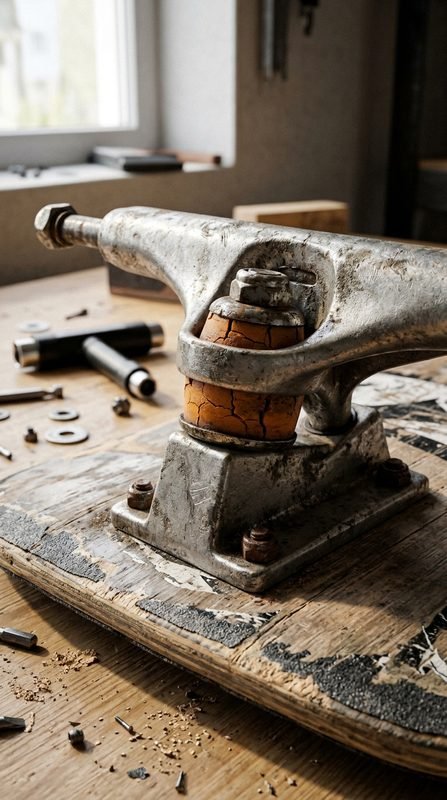
Sometimes the wheels aren’t the problem at all.
If the entire skateboard shifts from side to side when riding, the issue may involve the trucks.
The trucks allow the skateboard to turn. Their bushings compress as the rider leans, influencing steering resistance.
Loose trucks, deteriorated bushings, and a worn pivot cup may contribute to unstable handling.
This is especially relevant when someone describes their skateboard as wobbling at speed.
How to check:
- Place the skateboard on a stable, level surface.
- Inspect the truck mounting hardware.
- Check the bushings for cracking, deformation, or unusual wear.
- Look for damaged or missing components.
- Confirm that the trucks are securely attached to the deck.
Also inspect the pivot cups and other truck parts if steering feels unusually loose or inconsistent.
How to fix it:
Start by checking for loose mounting hardware and damaged parts.
Adjust the kingpin nut only within the truck manufacturer’s recommended range.
If the bushings are worn or unsuitable for the setup, replace them with compatible components.
Don’t overtighten the kingpin simply to eliminate movement. That can damage bushings and make the board harder to control.
If the entire board becomes unstable at speed, slow down safely, avoid steep hills, and have the setup checked before riding again.
Quick Skateboard Wheel Wobble Troubleshooting Chart
Use this table to narrow down the likely cause before buying replacement parts.
| What You Notice | Possible Cause | First Thing to Check |
|---|---|---|
| Wheel moves excessively along the axle | Loose axle nut | Nut security and lateral play |
| Grinding or rough wheel rotation | Contaminated or damaged bearings | Bearing condition |
| Wheel appears tilted or misaligned | Bent axle or installation issue | Axle and bearing alignment |
| Repeated thumping during rolling | Flat-spotted or damaged wheel | Wheel rolling surface |
| Wheel looks crooked after bearing installation | Improperly seated bearing | Both bearing seats |
| Wheel binds after assembly | Spacer, washer, or nut issue | Hardware compatibility |
| Entire board oscillates while riding | Truck setup, worn components, or riding conditions | Trucks, bushings, and riding environment |
Note: These symptoms are clues, not definitive diagnoses. More than one problem may be present at the same time.
How to Check a Wobbly Skateboard Wheel in 10 Minutes
For more maintenance essentials, check out our guide to the best skate tools.
If you’re not sure where the problem starts, use this basic inspection routine.
You don’t need a professional workshop.
Tools You’ll Need
- Skateboard T-tool with an axle-nut socket
- Clean cloth
- Good lighting
- A stable work surface
- Optional bearing tool, if removal is necessary
Step 1: Inspect the Wheel Without Riding
Place the skateboard upside down on a stable surface.
Spin each wheel separately and watch its outer edge.
Compare the affected wheel with the others.
Look for uneven rotation, excessive side movement, scraping, or visible damage.
Step 2: Check for Lateral Movement
Gently hold the wheel and move it along the axle.
A small amount of movement may be normal, but excessive movement deserves closer inspection.
Check that the axle nut is securely fastened and the wheel still rotates freely.
Step 3: Inspect the Wheel Surface
Slowly turn the wheel while looking for flat spots, cracks, or uneven wear.
If the wheel has structural damage, stop the inspection and plan for replacement.
Step 4: Examine the Bearings
If the problem remains unexplained, remove the wheel.
Inspect both bearings for rough rotation, visible damage, or improper seating.
Don’t force stuck parts or damage the shields.
Step 5: Check the Axle and Hardware
Look at the exposed axle and its threads.
Check for visible bending, cracks, or other damage.
Inspect washers and spacers where applicable.
Step 6: Reassemble and Test by Hand
Reinstall the wheel using the correct hardware arrangement.
Secure the axle nut appropriately and check that the wheel spins without binding.
If you cannot confirm the assembly is secure, don’t ride.
Step 7: Perform a Cautious Ground-Level Check
Only after the parts appear properly installed and undamaged should you consider a low-speed check.
Use smooth, flat ground away from traffic and obstacles.
Wear appropriate protective gear.
If the board feels unstable, makes concerning noises, or continues to wobble excessively, stop and have it inspected.
Wheel Wobble vs. Skateboard Speed Wobble
These problems are often confused, but they shouldn’t be treated as the same issue.
Wheel wobble usually describes unwanted movement or irregular rotation of an individual wheel.
You may notice it while spinning a wheel by hand.
Speed wobble describes repeated side-to-side steering oscillation of the skateboard while moving.
It may involve the truck setup, rider inputs, speed, terrain, or other factors.
Tightening an axle nut won’t necessarily resolve speed wobble.
Likewise, tightening a truck’s kingpin won’t repair a cracked wheel or damaged bearing.
Identifying which problem you’re experiencing can prevent unnecessary purchases and unsafe adjustments.
Is a Little Skateboard Wheel Wobble Normal?
A small amount of apparent wheel movement isn’t always a sign of damage.
Manufacturing tolerances, wheel shape, and the way the wheel is mounted can influence what you see while spinning it.
Some setups also allow a slight amount of movement along the axle.
However, don’t assume noticeable wobble is harmless simply because the wheel still spins.
Be more cautious if you notice any of the following:
- Increasing lateral play
- Grinding or repeated clicking
- Structural wheel damage
- An insecure axle nut
- Bent or cracked truck components
- Sudden instability while riding
If you’re uncertain whether the movement is acceptable, an experienced skate-shop technician can inspect the wheel assembly.
Mistakes to Avoid When Fixing Skateboard Wheel Wobble
Tightening Every Nut as Hard as Possible
More tension doesn’t automatically mean better performance.
Overtightening the axle nut can create binding on some bearing arrangements, while excessive kingpin adjustment may damage bushings.
Use the correct setup and follow component guidance.
Replacing Bearings Without Checking the Wheel
It’s easy to blame bearings for every unusual noise or movement.
But a damaged wheel, crooked bearing seat, or bent axle may be responsible.
Inspect the entire assembly before spending money.
Trying to Straighten a Bent Axle
Truck axles are load-bearing components.
Improvised straightening can create additional damage or weaken the part.
Replacement or professional inspection is the safer approach.
Using the Wrong Lubricant
Not every household lubricant is suitable for skateboard bearings.
Avoid random oils, heavy grease, or products that may attract dirt or damage bearing components.
Use an appropriate lubricant recommended for the bearing design.
Ignoring Cracked Wheels
A cracked wheel may continue spinning during a basic hand test, but that doesn’t mean it’s safe to ride.
Replace structurally damaged wheels rather than testing them under load.
Confusing Speed Wobble With Wheel Damage
If the whole skateboard oscillates while moving, changing a bearing may have no effect.
Check the trucks, bushings, board setup, and riding conditions instead.
How to Prevent Skateboard Wheel Problems
Good maintenance won’t prevent every damaged component, but it can help you notice problems early.
Inspect Your Board Regularly
Before riding, check the wheels, trucks, axle nuts, and mounting hardware.
Look for obvious damage and unusual looseness.
Keep Bearings Away From Water
Wet conditions can contribute to bearing contamination and corrosion.
Avoid unnecessary exposure to water and follow the bearing manufacturer’s maintenance instructions.
Watch for Uneven Wheel Wear
Inspect wheels for flat spots and damage.
Rotate wheel positions when appropriate to help manage wear, but replace wheels that are already structurally compromised.
Avoid Unnecessary Hard Impacts
Rough landings and collisions can place substantial stress on skateboard components.
Inspect your setup after a significant impact, particularly if the board suddenly behaves differently.
Replace Worn Hardware
Axle nuts with damaged locking inserts, stripped threads, or other visible defects should be replaced with properly compatible parts.
Frequently Asked Questions
Why does one skateboard wheel wobble more than the others?
One wheel may have a loose axle nut, damaged bearing, uneven wear, or an installation problem.
Compare its movement with the other wheels and inspect the affected assembly carefully.
Can loose skateboard bearings cause wobble?
Damaged bearings with excessive internal play can contribute to unwanted movement.
However, dirt or rough spinning alone doesn’t prove that the bearings are responsible for visible wobble.
Should skateboard wheels move side to side?
A small amount of lateral movement can be normal on certain setups.
Excessive movement, insecure hardware, unusual noises, or unstable riding should be investigated.
Can I fix a wobbling skateboard wheel without buying new parts?
Sometimes.
A loose axle nut or incorrectly seated bearing may be corrected without replacing the entire wheel.
But damaged bearings, cracked wheels, and bent axles generally require replacement or professional attention.
Why does my skateboard shake when I go fast?
If the entire board oscillates, you may be experiencing speed wobble rather than an individual wheel problem.
Truck setup, worn components, rider technique, terrain, and speed can all contribute.
Avoid high-speed riding until the cause is understood.
Can uneven skateboard wheels cause vibration?
Yes. Flat spots and significant uneven wear can cause repeated vibration or a thumping sensation as the wheels roll.
Inspect and replace damaged wheels when necessary.
Is it safe to skateboard with a wobbly wheel?
It depends on what’s causing the movement.
Minor movement within a properly assembled wheel system may be normal, but excessive play, damaged components, or unstable riding shouldn’t be ignored.
When in doubt, stop riding and have the skateboard inspected.
Final Thoughts
A wobbling skateboard wheel can look alarming, but the first step is usually straightforward: identify exactly which part is moving.
Start with the axle nut, then inspect the wheel, bearings, and axle. If the problem only happens while riding, consider whether the entire truck setup is causing instability instead.
Don’t replace parts randomly or tighten everything as hard as possible.
A careful inspection can save time and help you avoid making the problem worse.
And if a wheel, bearing, or axle shows structural damage, replacing the affected component is more sensible than trying to squeeze a few more sessions out of it.
Your skateboard should feel predictable under your feet. When something starts moving in a way it shouldn’t, checking it early is always the better call.