An electric skateboard battery is one of the most important—and often most expensive—parts of your board. It powers the motor, influences riding range, and affects how consistently your skateboard performs.
But battery maintenance involves more than plugging in a charger after every ride. Poor charging habits, prolonged storage, excessive heat, and overlooked damage can gradually reduce battery performance or create serious safety risks.
The good news is that many avoidable problems can be prevented with sensible care.
This guide explains how to charge, store, inspect, and maintain your electric skateboard battery. You’ll also learn the warning signs that mean you should stop using your board and seek professional assistance.
Table of Contents
Important: Electric skateboard batteries differ by manufacturer, chemistry, charging system, and battery management software. Always follow the instructions supplied with your specific skateboard. General advice should never override the manufacturer’s safety requirements.
1. Understand How Your Electric Skateboard Battery Works
Battery capacity and range vary between models. Compare different options in our guide to the best electric skateboards.
Most modern electric skateboards use rechargeable lithium-ion battery packs. These contain multiple cells working together to store and deliver electrical energy.
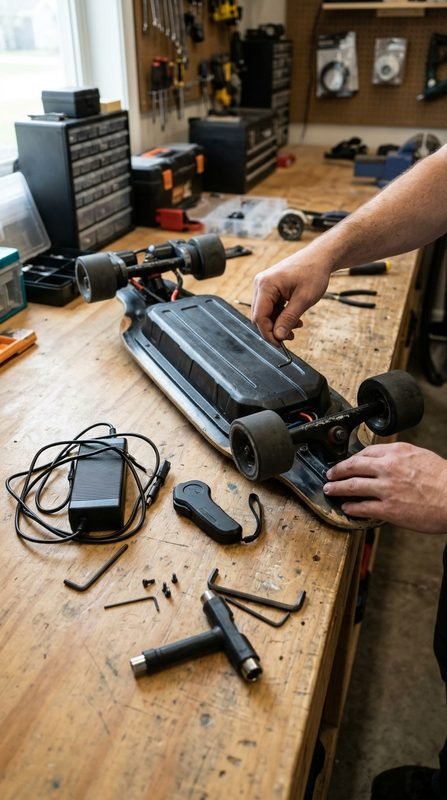
A battery management system, commonly called a BMS, helps monitor and control important operating conditions. Depending on the design, it may provide protection against excessive voltage, low voltage, overcurrent, and temperature problems.
However, a BMS is not a reason to ignore charging or storage precautions.
Several battery specifications are worth understanding:
- Voltage (V): Relates to the electrical system and battery configuration.
- Amp-hours (Ah): Describes electrical charge capacity.
- Watt-hours (Wh): Represents stored energy and is useful when comparing battery capacities.
- Charge cycles: A way of measuring cumulative battery usage over time.
Battery performance also depends on rider weight, speed, terrain, weather, tire pressure where applicable, and how aggressively the board is ridden.
Understanding these basics makes it easier to recognize changes in battery performance.
2. Use the Correct Charger Every Time
One of the most important electric skateboard battery care habits is using a compatible charger.
A charger that physically fits the charging port is not necessarily safe for your battery.
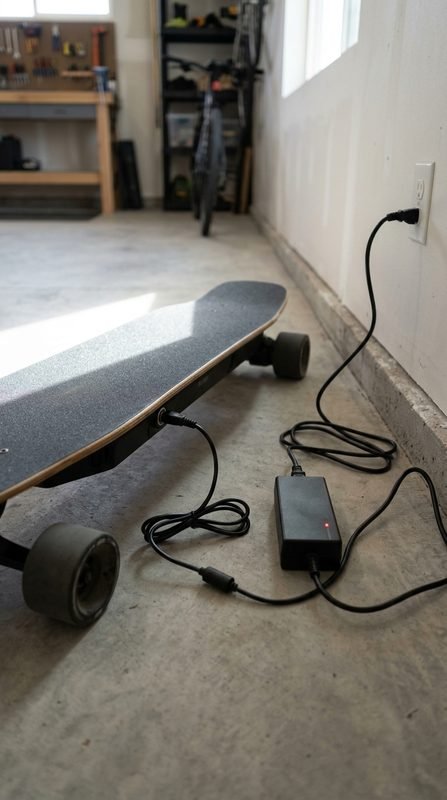
Different electric skateboards may require different output voltages, charging currents, connectors, and communication or protection features.
Follow these charging precautions:
- Use the original charger or a replacement explicitly approved by the skateboard manufacturer.
- Inspect the charger, cable, and connector before use.
- Keep charging equipment away from moisture.
- Avoid using cables with exposed wires, cracked insulation, or damaged connectors.
- Never force a connector into the charging port.
- Follow the manufacturer’s recommended connection and disconnection sequence.
If the original charger has been lost, confirm the correct replacement model with the manufacturer instead of choosing a generic charger based on appearance.
An incompatible charger can damage the battery or electrical system and may increase fire risk.
3. Let the Battery Return to a Safe Temperature
Temperature affects both battery performance and charging safety.
After a demanding ride, an electric skateboard battery may be warmer than usual. Fast riding, steep hills, high ambient temperatures, and heavy loads can increase heat.
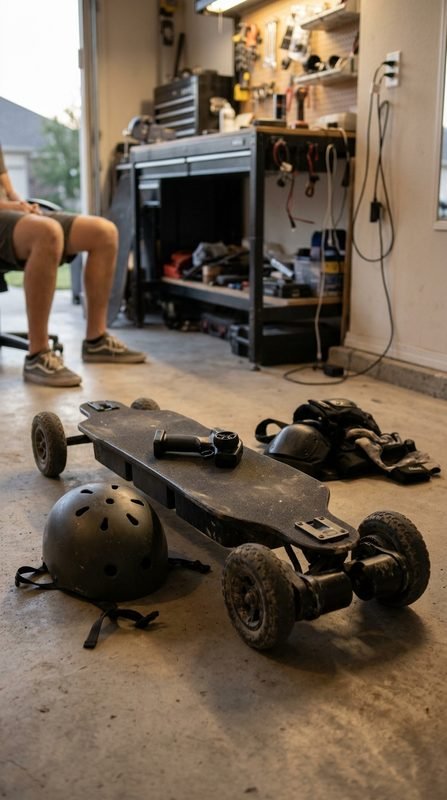
If the skateboard or battery feels unusually hot, do not charge it immediately.
Allow it to return to the manufacturer’s permitted charging temperature range in a cool, dry, well-ventilated location.
Likewise, a board that has been stored in freezing conditions may need time to warm to an appropriate charging temperature.
Avoid these mistakes:
- Charging a hot battery immediately after strenuous riding.
- Charging a battery that is below its approved temperature range.
- Leaving the board in direct sunlight while charging.
- Using external heaters to warm the battery quickly.
- Placing the skateboard near radiators or other heat sources.
There is no universal waiting period that applies to every skateboard. The correct approach is to follow your model’s temperature limits.
4. Avoid Leaving Your Skateboard Charging Unattended
Even when a battery system includes built-in charging protection, sensible supervision remains important.
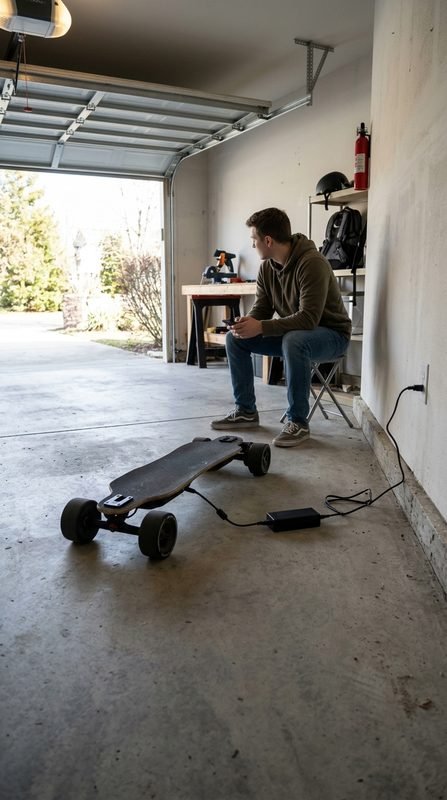
Charge your electric skateboard in a location where you can notice unusual behavior and disconnect the charger safely if necessary.
Choose a stable, dry location with adequate ventilation. Keep the battery and charger away from paper, clothing, upholstered furniture, and other combustible materials.
Do not charge the board under bedding, inside a tightly enclosed space, or where it could obstruct an exit.
A safer charging routine:
- Inspect the board, battery enclosure, and charging port.
- Confirm that the equipment is dry and undamaged.
- Place the skateboard in a suitable charging location.
- Connect the manufacturer-approved charger according to its instructions.
- Check for abnormal heat, odor, or sounds.
- Disconnect when charging is complete, following the manufacturer’s instructions.
Avoid overnight or unattended charging.
If you notice smoke, a strong chemical smell, swelling, hissing, or abnormal heating, stop using the system. If there are signs of fire or an imminent emergency, move away and contact emergency services rather than attempting to handle the battery.
5. Store Your Electric Skateboard Battery Properly
Storage habits can strongly influence long-term battery health.
Leaving a lithium-ion battery unused for extended periods at a very high or very low charge level can contribute to deterioration.
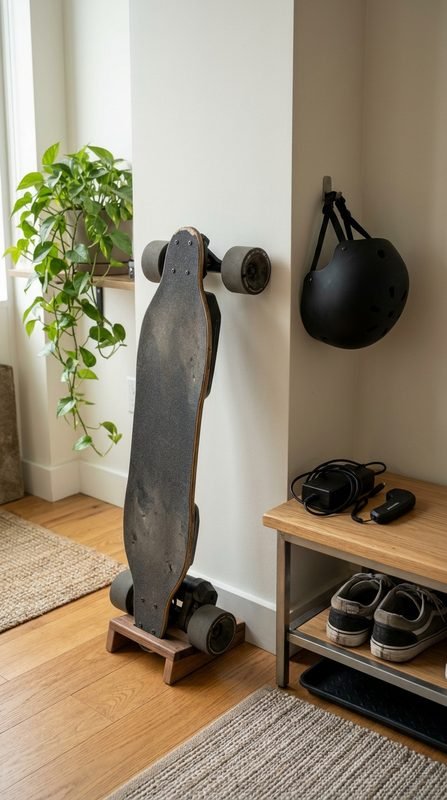
For many lithium-ion systems, a partial charge is preferable for extended storage. However, the correct percentage and maintenance schedule depend on the manufacturer.
Some manufacturers recommend approximately half charge for storage, while others provide specific instructions for periodic checking and recharging.
Before storing your electric skateboard:
- Read the manufacturer’s storage guidance.
- Set the battery to the recommended storage charge level.
- Switch off the board completely.
- Disconnect the charger.
- Clean and dry the exterior.
- Keep the skateboard away from moisture and direct sunlight.
- Avoid extremely hot or cold storage environments.
- Check the battery periodically according to the manual.
Do not assume that storing your battery at 0% or 100% is best.
If your skateboard has a designated storage mode, use it as instructed.
A suitable indoor storage location is generally preferable to a hot vehicle, damp shed, or uninsulated garage.
6. Prevent Deep Discharge During Long Breaks
An electric skateboard left unused for months may gradually lose charge even when switched off.
Battery management electronics and normal self-discharge can reduce stored energy over time.
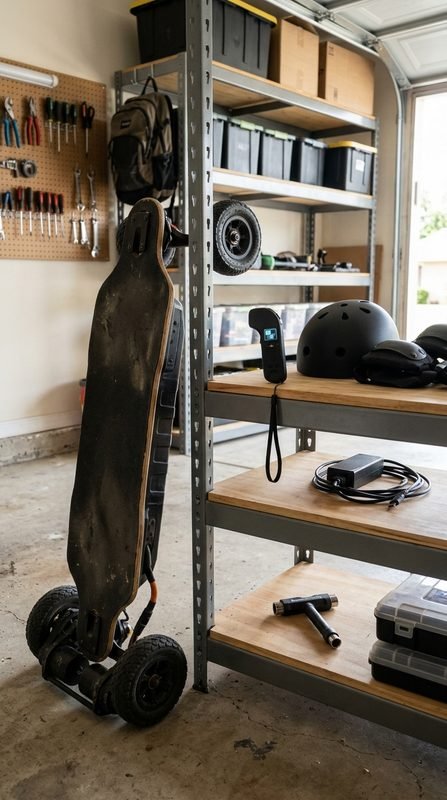
If the voltage falls too low, the battery may become difficult or impossible to recharge normally. Recovery can require professional assessment, and some severely discharged batteries should not be reused.
For longer storage periods:
- Start at the charge level recommended by the manufacturer.
- Record when you put the board into storage.
- Check the battery at the recommended interval.
- Recharge only as instructed for that model.
- Inspect the enclosure and charging equipment before returning to regular riding.
Do not attempt to bypass the battery management system, jump-start individual cells, or force a battery to accept a charge.
These procedures can be dangerous, especially with multi-cell lithium-ion packs.
If the battery refuses to charge after storage, contact the manufacturer or a qualified service professional.
7. Protect the Battery From Water, Impacts, and Damage
Electric skateboards operate close to the ground, which exposes them to dust, debris, vibration, road spray, and occasional impacts.
Even a board advertised as water-resistant may have limitations regarding rain, puddles, and cleaning methods.
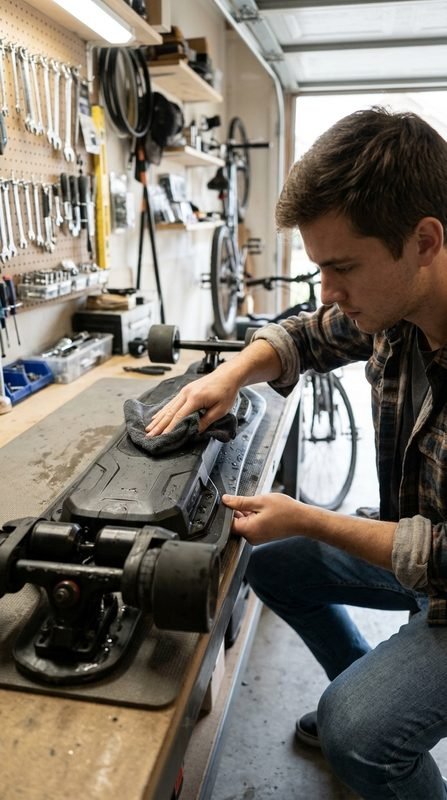
Water entering the battery enclosure can damage electrical connections and create safety hazards.
Good maintenance practices include:
- Avoid riding through deep puddles.
- Check your specific board’s water-resistance limitations.
- Never pressure-wash the battery enclosure.
- Use the manufacturer’s recommended cleaning method.
- Check for damaged seals, cracks, and loose components.
- Inspect the board after significant impacts.
If the board becomes wet, follow the manufacturer’s instructions before using or charging it again.
If water may have entered the battery enclosure, stop using and charging the board until it has been assessed appropriately.
A cracked or dented enclosure should not be dismissed as a cosmetic issue. Physical damage can affect components that are not visible from the outside.
8. Recognize Warning Signs of Battery Problems
An electric skateboard battery may show warning signs before a serious failure, although not every fault is immediately noticeable.
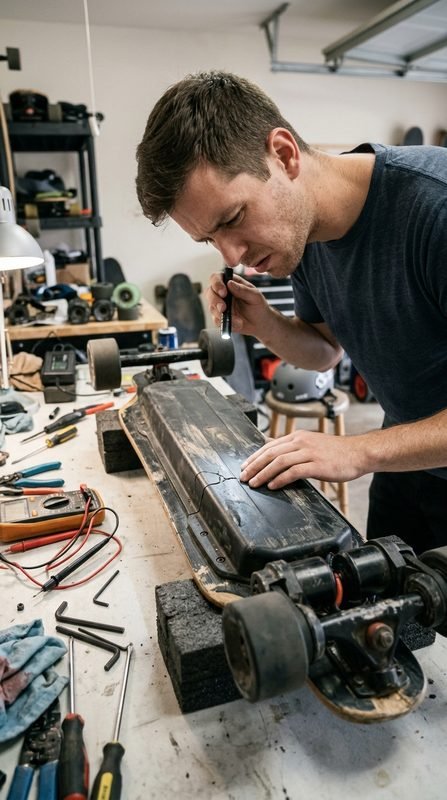
Knowing what to look for can help you stop using a potentially unsafe battery.
| Warning sign | Recommended action |
|---|---|
| Unusual battery swelling | Stop using and charging; seek professional assistance |
| Strong chemical odor | Stop use, keep away, and seek qualified help |
| Smoke or hissing | Move away and contact emergency services |
| Unusual heat during charging | Stop charging if safe and arrange inspection |
| Cracked battery enclosure | Do not continue using until assessed |
| Repeated unexpected shutdowns | Check manufacturer troubleshooting guidance |
| Rapid, unexplained range reduction | Investigate battery condition and other possible causes |
A shorter riding range does not automatically mean the battery is defective.
Cold weather, hills, rider weight, wind, wheel resistance, and riding style can also reduce range.
However, a sudden change that cannot be explained by normal conditions deserves attention.
Never open, puncture, crush, or modify a lithium-ion battery pack to investigate a suspected problem yourself.
9. Know When to Replace an Electric Skateboard Battery
Every rechargeable battery experiences some capacity loss as it ages.
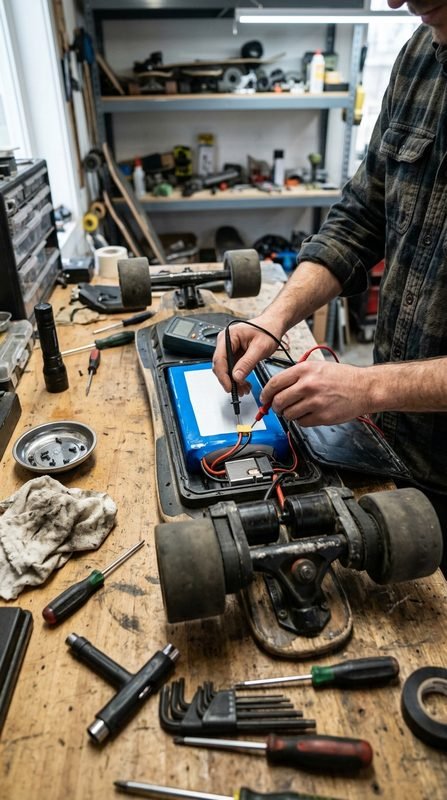
Over time, you may notice that your skateboard travels a shorter distance on a charge than it did when new.
Battery aging is influenced by several factors, including charge cycles, temperature exposure, storage conditions, cell quality, and operating demands.
Consider professional battery evaluation when:
- The riding range has declined substantially under similar conditions.
- The battery repeatedly fails to charge normally.
- The board unexpectedly shuts down despite indicating available charge.
- The manufacturer identifies a battery fault.
- The enclosure has suffered significant damage.
- Charging produces abnormal heat, odor, or other warning signs.
Replacement decisions should be based on the manufacturer’s recommendations and proper diagnosis, not an arbitrary number of months.
Use manufacturer-approved replacement components.
A battery with the wrong voltage, configuration, connectors, or BMS compatibility can damage the skateboard and create serious hazards.
Common Electric Skateboard Battery Mistakes to Avoid
Even experienced riders sometimes develop habits that are hard on their equipment.
Here are several mistakes worth avoiding.
Using an Unverified Fast Charger
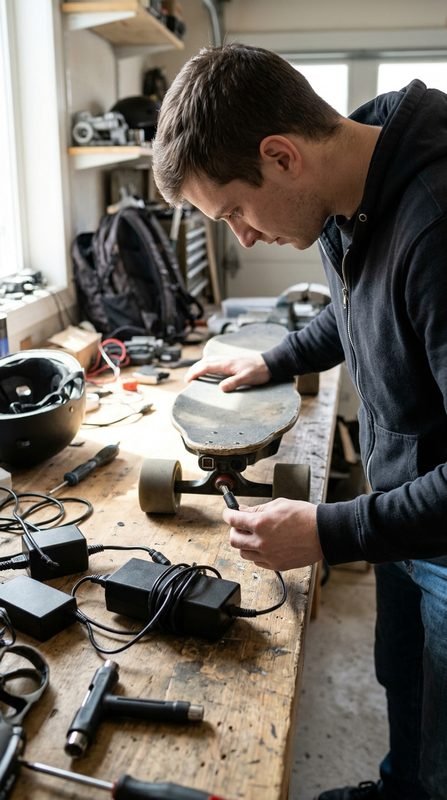
A higher charging current does not automatically make a charger suitable for your board.
Only use fast-charging equipment when the manufacturer confirms compatibility.
Storing the Board With an Empty Battery
An already low battery may discharge further during storage, potentially reaching a damaging level.
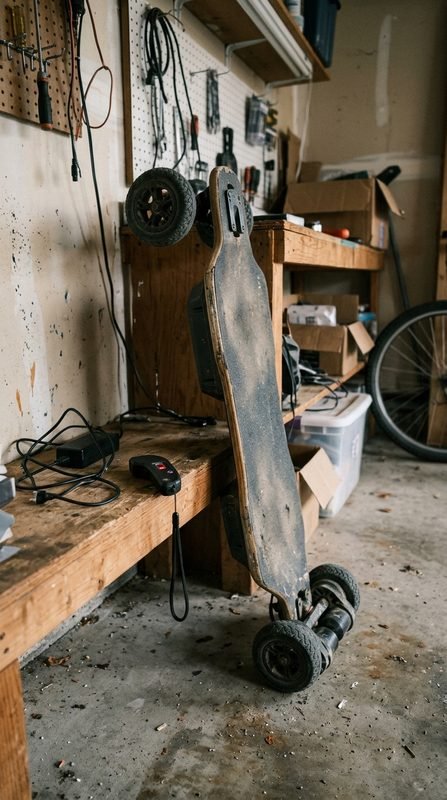
Follow the recommended storage charge and inspection schedule.
Charging Immediately After Exposure to Water
Wet electrical connectors can create problems even when the rest of the skateboard looks normal.
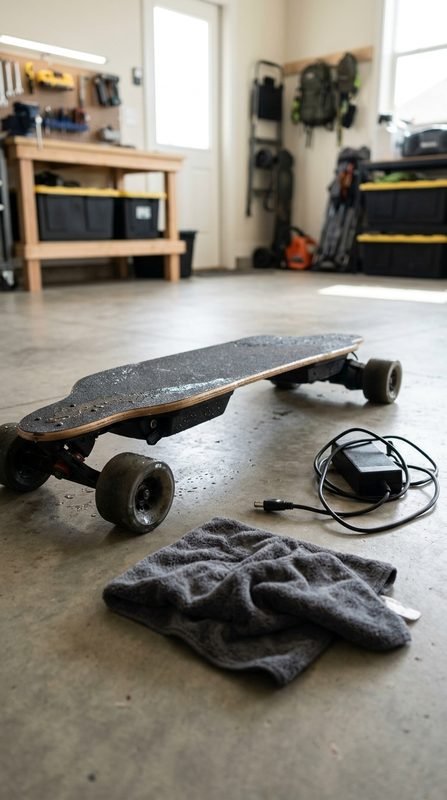
Do not charge until the manufacturer’s drying and inspection requirements have been met.
Ignoring Physical Battery Damage
A damaged enclosure, unusual swelling, or chemical smell can indicate a serious problem.
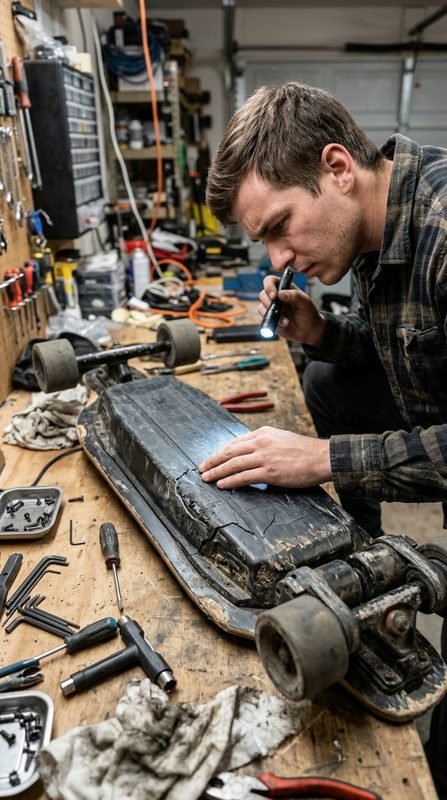
Stop using the board and seek professional help rather than attempting a home repair.
Assuming Every Brand Has the Same Battery Rules
Electric skateboards vary significantly in battery design.
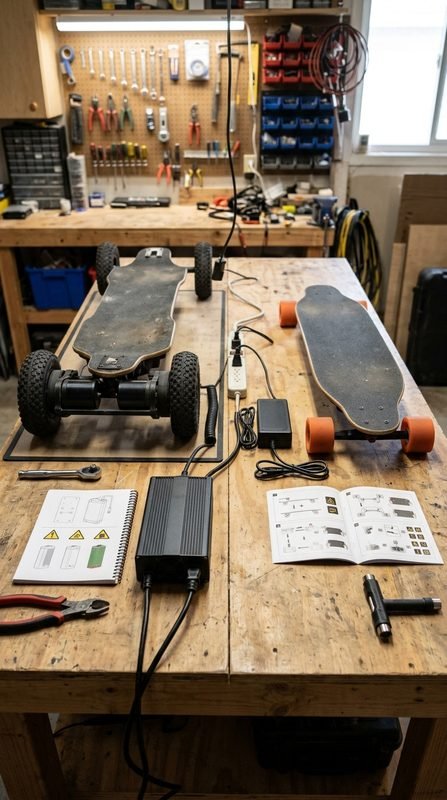
A charging or storage recommendation for one brand may not apply to another model.
The safest general rule is simple: know your skateboard’s manual and follow it consistently.
Electric Skateboard Battery Care Checklist
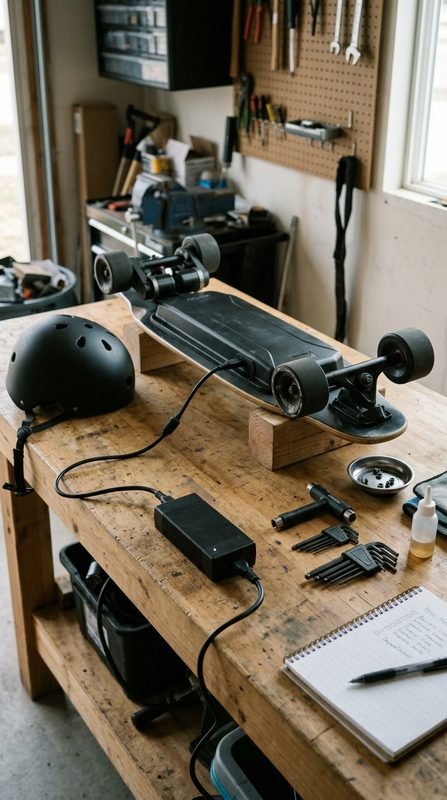
Use this quick checklist to keep track of basic maintenance.
| When | What to check |
|---|---|
| Before riding | Battery enclosure, visible damage, charge level |
| After riding | Unusual heat, moisture, damage |
| Before charging | Charger compatibility, cables, port, temperature |
| After charging | Disconnect according to manufacturer instructions |
| Before storage | Recommended charge level, clean and dry condition |
| During storage | Battery condition and manufacturer-specified charge checks |
| After a hard impact | Enclosure integrity and possible internal damage |
| When performance changes | Range, charging behavior, warning messages |
A simple routine is usually more effective than waiting until your skateboard develops an obvious problem.
Frequently Asked Questions
How long does an electric skateboard battery last?
Battery life varies by cell quality, design, usage, charging practices, and storage conditions. Many lithium-ion packs can remain useful for several years, but there is no reliable universal replacement date.
Should I charge my electric skateboard to 100%?
A full charge is appropriate when permitted by your manufacturer’s instructions and when you need maximum riding range. For extended storage, many manufacturers recommend a lower charge level. Follow your model’s instructions rather than applying one percentage to every board.
Can I leave my electric skateboard charging overnight?
Avoid charging while asleep or otherwise unable to supervise the board. Follow the manufacturer’s charging guidance and disconnect the charger when charging is complete.
Can cold weather damage an electric skateboard battery?
Cold conditions can temporarily reduce available power and range. Charging a battery below its permitted temperature range can be unsafe. Allow the board to reach the approved charging temperature before plugging it in.
Why is my electric skateboard losing range?
If you regularly commute to campus, our guide to the best electric skateboard for college can also help you compare range and portability.
Possible causes include battery aging, cold temperatures, higher speeds, hills, increased rolling resistance, or heavier loads. If the reduction is sudden or substantial, consult the manufacturer.
Can I replace an electric skateboard battery myself?
Only if the manufacturer explicitly supports user replacement and you can follow its approved procedure. Otherwise, use qualified service personnel. Never attempt to open or rebuild individual lithium-ion cells.
Final Thoughts
Proper electric skateboard battery care is about consistency, not complicated maintenance.
Using the correct charger, avoiding extreme temperatures, storing the battery appropriately, inspecting for damage, and recognizing warning signs can all help protect your skateboard’s performance.
The most important lesson is that battery safety rules are not identical across every electric skateboard.
Check your manufacturer’s manual, respect the battery’s charging limits, and seek professional assistance whenever something appears unsafe.
A carefully maintained electric skateboard battery can support more dependable rides—and help you avoid preventable problems along the way.